
Ensuring you have the correct curtain pole length determines how your curtains hang, how much light enters the room, how smoothly the fabric moves and how well the weight of the curtains is supported over time. A curtain pole that is too short will leave the curtains covering part of the window even when open, while a pole that is too long can look disproportionate or lack sufficient support between brackets. In bay windows, inaccurate measurements can prevent the system from following the wall shape accurately, particularly at multiple angles and corners.
The right size depends on the window width, the curtain heading, the fabric weight, and whether you are fitting a straight pole or track, or working around a bay. This guide explains how to accurately measure and select a suitable curtain pole or track for both standard windows and more complex bay windows.
How Wide Should a Curtain Pole Be Compared to a Window?
For a straight window, the principle is simple. Measure the width of the window recess and allow additional space on either side so the curtains can stack back fully when open.
In most installations, curtain poles extend between 15cm and 30cm beyond the window frame on each side. This overhang allows the curtains to sit against the wall rather than across the glass, improving light levels and giving the room a more balanced appearance.
For example, if your window measures 115cm inside the recess, you would usually select a pole length between 145cm and 175cm. For wider windows, such as 180cm, a pole in the region of 210cm to 240cm is common. The exact figure will depend on available wall space and personal preference.
Always use a metal tape measure for accurate measurements. Measure the width in more than one place and record the largest figure. This ensures the total width you work with accounts for minor variations in plaster or wall alignment.
Measuring Step by Step for Accurate Results
Start by measuring the width of the window recess at the top, middle and bottom. Note the largest measurement. From there, decide how much additional space you want beyond the window on each side and calculate your pole length.
Next, decide how the system will be fixed. A wall bracket is typical for curtain poles and tracks installed above the window frame. A ceiling bracket can be the ideal choice where there is limited space above the window, when fitting into a recess, or when a more contemporary ceiling fixed track is preferred.
Once the fixing position is determined, measure from that point down to the floor to establish curtain length. If the floor is uneven, measure in several places to avoid curtains sitting too low on one side. Careful measurements at this stage prevent ordering curtain poles and tracks that are undersized or insufficiently supported.
Curtain Heading, Fabric Weight and Pole Diameter
Curtain heading influences both the appearance and the structural requirements of the system. Eyelet curtains slide directly onto the pole. They require a smooth metal pole and typically look proportionate on 28mm or 35mm diameters. Because the eyelets create evenly spaced folds, they need sufficient pole length to stack back neatly at one side or form an even pair.
Pencil pleat headings use curtain hooks attached to curtain rings or track gliders. Pencil pleat allows greater fullness, meaning more fabric across the width of the window. This can increase overall weight, particularly with lined curtains.
When choosing between a 28mm and 35mm pole, consider the span and fabric weight. A 28mm pole is suitable for lightweight curtains and moderate window widths. A 35mm pole provides greater rigidity and is more appropriate for heavy curtains, wider openings and larger installations including bay windows.
Heavier fabric increases the load placed on brackets and fixings. In these cases, additional brackets should be introduced to provide adequate support along the wall or ceiling.
Curtain Pole or Track: Which Is More Suitable?
Curtain tracks distribute the weight of curtains along gliders within the track channel, rather than concentrating weight at curtain rings. This makes tracks particularly suitable for heavy curtains, tall drops and long spans across wide windows. Tracks are also a great option where a discreet ceiling installation is required.
Corded tracks are often used for large or heavy curtains, allowing the curtains to be operated without handling the fabric directly. This helps maintain smooth movement and reduces wear.
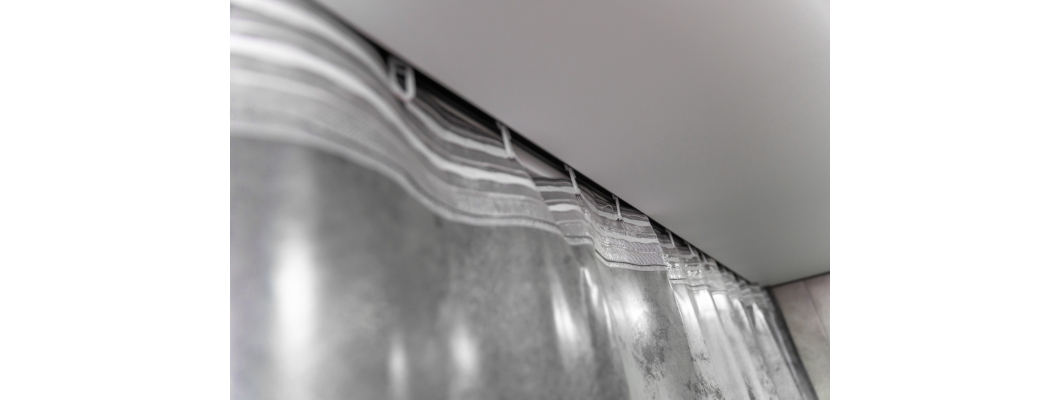
Wave systems combine the consistent appearance of evenly spaced folds with the performance of a track. Wave tracks and poles create a modern curtain heading that maintains its shape across the full width of the window and glide smoothly along the profile.
At SG-S, we supply a full range of curtain poles and tracks, including hand-operated systems, corded tracks and wave tracks and poles. We regularly advise on whether a pole or track is the ideal choice based on span, weight and layout. In heavy curtain applications and larger windows, selecting the correct system from the outset ensures reliable long term performance.
For more information on contemporary systems, see our wave tracks and poles range.
Measuring Bay Windows Correctly
Bay windows require a more detailed approach. A bay is not one continuous flat surface. It is formed from multiple sections of wall joined at angles, and each section must be measured independently.
Begin by measuring the width of each straight section of the bay window from wall to wall. Record every measurement separately. Next, measure the angle at each corner. Even if the bay appears symmetrical, do not assume the angles are identical. Small differences can affect how a pole or track sits once installed.
When fitting a bay window curtain pole, additional brackets are required at each bend or corner to provide proper support. Without adequate brackets, the pole may sag at the weakest point, especially when supporting heavy curtains.
In bay windows, we frequently recommend bent curtain tracks because they can be manufactured to follow the exact shape and angle of the bay. This allows the curtains to sit neatly around corners and glide smoothly across each section without interruption. Where appropriate, we also advise on shaped bay window curtain poles using formed bends or corner joints, depending on the shape and structural requirements.
For larger bay windows, a continuous track across the entire bay can create a seamless look. Alternatively, separate poles and tracks can be fitted to each section, allowing independent movement. The most suitable configuration depends on the layout of the room, the curtain heading and how you want the curtains to sit when open.
How Should Curtains Hang in a Bay Window?
Curtains in a bay window should follow the shape of the wall and sit evenly across all sections. Whether you use a pole or track, the system must accommodate the angles and corners without restricting movement.
You may choose a single pair of curtains spanning the full bay or separate pairs across different sections. This depends on the total width, available stack back space and fabric weight.
Curtain length in bay windows should remain consistent throughout. Measure from the fixing position to the floor at multiple points within the bay to account for uneven surfaces. Decide whether the curtains will sit just above the floor, lightly touch it or form a slight puddle, and apply that measurement across each section.
Consistency in length and alignment ensures the bay window curtain installation looks intentional and well proportioned.
What Size Curtains Do I Need for a 240cm Pole?
If you are fitting a 240cm pole, the combined width of the curtains should generally be between one and a half to two times the pole length, depending on the curtain heading.
Pencil pleat curtains typically require more fabric to achieve proper fullness. Eyelet curtains are often supplied in fixed widths, so ensure the pair provides sufficient coverage across the total width of the pole when closed.
The goal is for the curtains to cover the entire window comfortably when drawn and stack back neatly without overcrowding the wall space when open.
Heavy Curtains and Structural Support
Heavy curtains demand additional structural consideration. Thick fabric, lining and interlining significantly increase weight, particularly across wide windows and bay windows.
For heavy curtains, select a robust metal pole or a high performance track. Increase the number of brackets and reduce spacing between them to provide proper support. In some installations, a ceiling bracket offers improved load distribution compared to wall fixing.
Generic decorative poles are not always suitable for heavy fabric or long spans. A system designed for performance will reduce the risk of sagging and ensure the curtains continue to glide smoothly over time.
Why Choose SG-S for Curtain Poles and Tracks?
Selecting the correct pole length is only one part of the specification. Performance depends on bracket positioning, support requirements and whether a pole or track is structurally appropriate for the window and fabric weight.
At SG-S, we specialise in Silent Gliss curtain poles and tracks and supply complete systems rather than standalone decorative hardware. Our range includes hand-operated tracks, corded tracks, wave tracks and poles, recess systems and electrically operated solutions.
We regularly work with shaped and angled bay windows where precise measurements and accurately formed bends are essential. In these installations, we advise on bracket spacing, support requirements and the most suitable fixing method, whether wall or ceiling.
Because we supply both full systems and spare parts, we understand how these products perform over time. That practical experience informs the guidance we provide, particularly where heavy curtains, wide spans or complex bay configurations are involved.
If you are unsure about pole length, diameter, support positions or how best to measure a bay window accurately, we recommend seeking technical advice before ordering. Getting the specification right at the outset ensures your curtains hang correctly, move smoothly and remain properly supported long term.
Summary
Before placing your order, review all measurements carefully. Confirm the final pole length, including finials, check bracket quantity based on span and ensure the fixing method suits the wall or ceiling construction.
In bay windows, verify each section and angle independently. Recheck every measurement before committing to a bent pole or track.
With accurate measurements, appropriate support, and a correctly specified system, your curtains will hang evenly, follow the window's shape, and operate reliably for years to come.
Frequently Asked Questions
How much wider should a curtain pole be than the window?
A curtain pole should usually extend 15cm to 30cm beyond the window on each side to allow the curtains to stack back fully and maximise light.
Should I choose a 28mm or 35mm curtain pole?
A 28mm pole is suitable for lightweight curtains and shorter spans. A 35mm pole provides better support for heavy curtains or wider windows.
What is the best option for bay windows, a pole or a track?
In bay windows, a bent curtain track is often the more reliable choice because it follows the exact angles of the bay and supports the weight evenly.
How do I measure a bay window for curtains?
Measure each section of the bay separately, then measure the angles between walls. Do not assume the angles are identical, even if the bay looks symmetrical.
How many brackets do I need for a curtain pole?
Most standard poles require two brackets, but wider spans or heavy curtains will need additional brackets to provide adequate support and prevent sagging.