
Choosing between roman blinds and venetian blinds is less about following a trend and more about understanding how each will perform in the context of your home. While both are widely used across residential interiors, they operate in fundamentally different ways, and those differences affect light control, maintenance, durability and the overall character of a room.
Roman blinds are fabric-based window coverings that raise into horizontal folds and lower into a smooth fabric panel. Venetian blinds are constructed from horizontal slats that can be tilted as well as raised. That mechanical distinction is not just a technical detail, it determines how much flexibility you have over light, how the blind responds to moisture, and how it integrates with the rest of the interior.
A well-chosen blind should suit the environment it sits in. A kitchen exposed to steam and regular cleaning has different requirements from a bedroom, where insulation and darkness are priorities. The comparison between Roman vs Venetian blinds becomes clearer when viewed through that practical lens.
What Is the Difference Between Roman and Venetian Blinds?
Roman blinds are built around a fabric panel attached to a headrail mechanism. Horizontal rods or stitched channels create controlled folds as the blind is raised. When fully lowered, the fabric sits flat across the window, filtering or blocking light depending on the lining. Adjustment is achieved by raising or lowering the blind to a specific height.
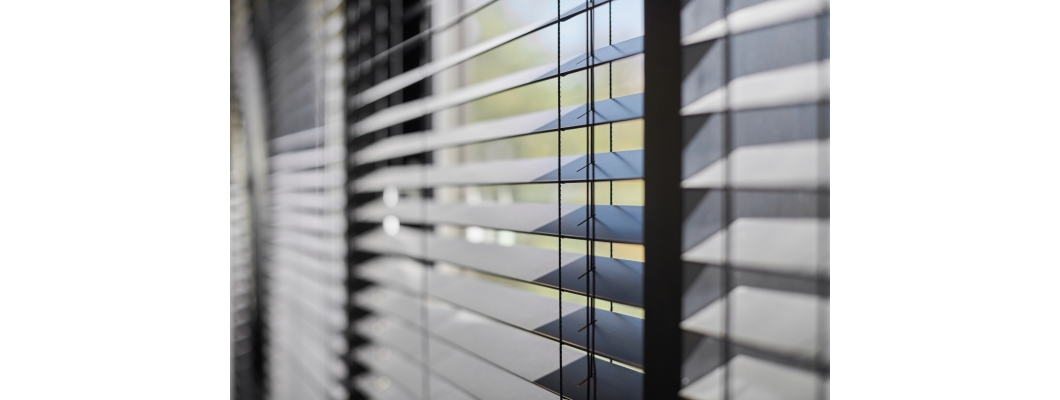
Venetian blinds operate via horizontal slats connected by cords or ladder tapes. Those slats can rotate independently of the lifting function. This means the blinds can remain fully lowered while the angle of the slats is adjusted to manage light and privacy. If a completely clear opening is required, the entire blind can be raised and stacked neatly at the top of the window.
This distinction may appear straightforward, but in practice it makes a meaningful difference. Venetian blinds allow incremental adjustment throughout the day, while Roman blinds provide broader control through height and fabric density.
Roman Blinds
Roman blinds combine the softness of curtains with the structure of a blind system. Because they present a continuous fabric surface when lowered, they tend to feel integrated into the interior rather than applied to it.
When raised, roman blinds form horizontal folds that stack neatly at the top of the window. When lowered, the fabric hangs flat or slightly contoured, depending on the style. This gives them a tailored appearance that suits spaces where visual cohesion matters, particularly bedrooms and living rooms.
Fabric selection influences not only appearance but performance. Lightweight materials allow filtered natural light to enter the room, while heavier fabrics create a more insulated and enclosed feel. The addition of thermal or blackout lining can significantly improve heat retention and light exclusion, making roman blinds particularly effective in bedrooms.
At SG-S, we supply complete Roman blind systems as well as Roman blind system parts, which means we work with the full assembly rather than isolated components. Our Roman blind systems are engineered for long-term reliability, with headrails and control mechanisms designed to support the weight and size of the blind.
From the specification stage through to installation and aftercare, we consider fabric weight, blind width and frequency of operation to ensure smooth lifting, consistent fold formation and dependable day-to-day use.
Benefits of Roman Blinds
Strong aesthetic appeal
Wide range of fabric, pattern and colour options
Luxurious and cohesive appearance
Suitable for bedrooms and living rooms
Compatible with thermal and blackout lining
Roman blinds enhance a room’s softness and work well in both modern and traditional interiors, where fabric is intended to play a prominent role.
Disadvantages of Roman Blinds
Fabric can absorb moisture and cooking residue
Not suited to high-humidity environments such as bathrooms
Less precise light control compared to venetian blinds
Require periodic cleaning to maintain appearance
In practice, roman blinds perform best in dry environments, where their visual appeal outweighs maintenance considerations.
Venetian Blinds
Venetian blinds are characterised by horizontal slats that can be tilted or raised. This dual movement provides greater flexibility in managing light and privacy throughout the day.
Because they are constructed from individual slats rather than a continuous surface, venetian blinds tend to read as a more structured or architectural element within the window opening. Their appearance is influenced heavily by material choice.
Aluminium venetian blinds offer a clean, contemporary finish and are moisture-resistant, making them suitable for kitchens and offices. Metal venetian blinds provide similar durability in high-use spaces. Faux wood venetian blinds replicate the appearance of timber while offering improved humidity resistance, making them particularly suitable for bathrooms and utility rooms. Real wood venetian blinds introduce natural grain and warmth, though they are generally better suited to stable, dry environments.
As with Roman blinds, the quality of the mechanism is critical. At SG-S, we supply complete Venetian blind systems, ensuring that lift and tilt mechanisms are properly specified for the size and intended use of the blind. Durability depends not only on material but on correct system selection from the outset.
Benefits of Venetian Blinds
Maximum light control through tilting slats
Suitable for high moisture environments
Durable materials, including aluminium and faux wood
Easier to maintain than fabric blinds
Effective daytime privacy
Adjusting the slat angle redirects or reduces natural light without fully lifting the blind, which can be particularly useful in rooms exposed to direct sunlight.
Disadvantages of Venetian Blinds
Small gaps between slats prevent a complete blackout
Slats require regular dusting
More structured appearance may not suit softer interiors
While venetian blinds offer strong practicality, they may not deliver the same level of softness or insulation as fabric-based systems.
Light Control and Daily Use
The difference in operation becomes more noticeable once the blind is in everyday use.
Venetian blinds allow you to adjust the angle of the slats without raising the blind itself. This provides more precise light control throughout the day. Direct sunlight can be reduced without sacrificing privacy, and natural light can still enter the room at a controlled angle. In spaces where glare is an issue, such as home offices or kitchens with reflective surfaces, this level of adjustment can be particularly useful.
Roman blinds control light through height and fabric density. Lowering the blind reduces light according to the opacity of the material. A blackout lining will block most incoming light, which can be valuable in bedrooms where darkness is important. However, there is less opportunity for incremental adjustment during the day compared to venetian blinds.
Both systems offer privacy when fully closed, but venetian blinds allow visibility to be managed more gradually through the tilt function.
Assessing Suitability by Room
In kitchens and bathrooms, moisture and ease of cleaning are important considerations. Aluminium venetian blinds and faux wood venetian blinds are generally more resistant to humidity and can be wiped clean with minimal effort. Fabric roman blinds may require more frequent maintenance in these settings, particularly where steam and cooking residue are present.
Bedrooms typically benefit from the insulation and light-blocking qualities of roman blinds, especially when fitted with blackout lining. The fabric can also contribute to a more enclosed and comfortable atmosphere. Venetian blinds can be used in bedrooms, but minor light leakage between slats is common.
Living rooms and dining areas often prioritise how the blind integrates with the broader interior. Roman blinds can introduce texture and pattern that complement furniture and decorative elements. Venetian blinds may suit more structured or contemporary interiors where clean lines are preferred.
Durability and Long-Term Performance
Durability is influenced by both material and mechanism.
Aluminium and faux wood venetian blinds are generally suitable for high-use areas. Real wood requires more careful placement to avoid prolonged exposure to moisture. Roman blinds depend on the quality of the headrail and cord system, particularly where heavier fabrics are used.
Considering Roman vs Venetian blinds from a practical perspective involves more than style alone. Light control, environmental considerations, maintenance, and long-term reliability all contribute to the right decision for a given space.
Why Choose SG-S?
At SG-S, we supply complete Roman and Venetian blind systems, as well as replacement parts and spares. Because we work with full systems, we consider headrail capacity, lift and tilt mechanisms, fixing method and blind dimensions before recommending a solution. A correctly specified blind will continue to operate smoothly for years after installation, rather than deteriorating under load.
We also support customers with blind system parts that require maintenance. That dual perspective, covering both new installations and ongoing servicing, gives us a practical understanding of how blinds behave in real environments.
If you are deciding between Roman and Venetian blinds and would like guidance on performance and appearance, contact us to discuss your requirements. We can help you select a system that suits your space and continues to perform reliably over time.
Final Thoughts
Roman blinds bring softness, elegance and luxurious texture to interiors. Venetian blinds offer precise light control, durability and versatility across a wide range of environments.
Both blinds serve distinct purposes. The right choice depends on the room, the level of light control required and how the blind will interact with furniture, finishes and overall interior style.
Rather than asking which is better in general, consider which is better for your specific space. In many properties, combining both delivers the strongest balance of beauty and functionality.
Frequently Asked Questions
Are Roman blinds better than Venetian blinds?
Neither is universally better. Roman blinds are often preferred in bedrooms and living spaces where fabric, insulation and a softer finish are priorities. Venetian blinds are generally more practical in kitchens, bathrooms and offices because they offer more precise light control and greater resistance to moisture.
Which blinds are best for kitchens and bathrooms?
In high-moisture environments, aluminium venetian blinds or faux wood venetian blinds are usually the more suitable option. Fabric roman blinds can absorb steam and cooking residue over time, which makes them less practical unless ventilation is excellent.
Do Venetian blinds block out light completely?
Venetian blinds provide strong light control through adjustable slats, but they do not typically achieve full blackout. Small gaps between slats can allow minor light penetration. For bedrooms where complete darkness is required, roman blinds with blackout lining are often more effective.
Are Roman blind mechanisms replaceable?
Roman blind headrails, cord systems and control mechanisms are serviceable components. In many cases, replacing a worn mechanism restores smooth operation without requiring replacement of the entire blind. At SG-S, we supply Roman blind system parts to support long-term performance.
Can you use Roman and Venetian blinds in the same home?
Many properties use roman blinds in living areas and bedrooms for softness and insulation, while installing venetian blinds in kitchens, bathrooms and offices for durability and adjustable light control. Choosing each blind according to the room’s demands often produces the best overall result.