
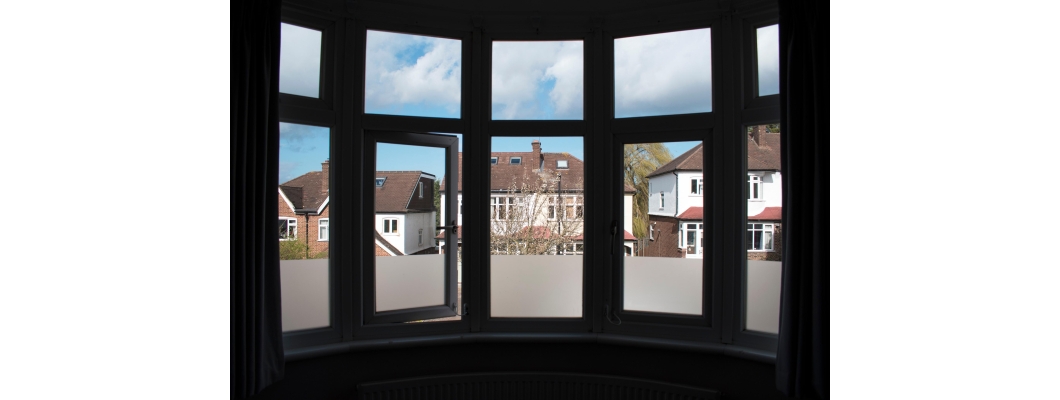
Measuring a curtain pole for a bay window may seem more complicated than it actually is, but this type of window does require more care than a straight window. When learning how to measure for curtains in a bay window, it’s important to understand that you are not working with a single continuous line, but with multiple sections of wall, angles and mounting points, as well as the need to ensure the curtains open and close smoothly without obstruction. In most cases, this also means thinking in sections rather than a single overall width, which helps avoid costly measurement errors.
The good news is that, with the right method from the start, it becomes much easier to choose the correct system and achieve an elegant and functional result. Whether you opt for a curtain pole, a curtain track or wave curtains, each option interacts differently with the shape of the bay. Curtain poles can also act as a more visible design feature, available in materials such as wood or metal, and capable of supporting heavier fabrics like blackout or thermal linings.
SG-S currently works with poles, tracks, Wave systems, ceiling-fixed options, motorised systems and the Metropole range. In many projects, the best result comes from understanding the geometry of the bay window before deciding on the product.
What Changes When Measuring a Bay Window
A bay window should not be treated as a single width. It is made up of several wall sections joined at angles, and each section needs to be measured separately when you measure curtains. This applies to both a bay window curtain pole and a bay track.
When someone measures the whole length from end to end without separating the parts, there is a risk that the system will not follow the shape of the wall or window frame, especially in windows with more than one corner or in a curved window.
Another important point is that the final look depends not only on the window width, but also on the type of curtain header, the weight of the fabric, the space available for gathering, and the method of fixing. Therefore, the correct measurement is not just about the product fitting. It ensures the curtains hang well, glide smoothly, and allow light in when open.
It is also worth considering curtain fullness when measuring curtains for a bay window, as the amount of fabric used will affect both appearance and performance. As a general guide, curtains are often made with additional width to create a fuller drape, helping achieve a balanced and well-proportioned finish across the bay.
Before Measuring, Decide Where the System Will Be Installed
Before taking the tape measure, it’s worth deciding whether the system will be mounted on the wall or the ceiling, as this is crucial for accurate measurements. SG-S recommends deciding on the system’s position first and only then taking the measurements, since both the length and the drop depend on this.
With curtain tracks, for example, the positioning can be just above the window or higher, and the same logic applies to curtain poles, especially on bay windows or where there is limited space above the window frame. When measuring for the curtain drop, it is important to measure from the exact point where the pole or track will be installed to the point where you want the curtains to sit, as this can vary depending on personal preference and room layout.
This decision also influences the choice between a wall bracket and a ceiling bracket. In installations with heavy curtains, wider spans or more complex geometries, ceiling mounting can distribute the load more effectively than wall mounting. This does not mean that ceiling mounting is always better, but it does highlight that the type of bracket is not merely a finishing detail — it is part of the system’s performance.
Types of Curtain Poles for Bay Windows
When selecting a curtain pole for a bay window, or a full bay window curtain solution, it is important to choose a style that not only fits the unique shape of the bay but also complements the window frame and the overall design of the room when you measure curtains correctly. Bay window curtain poles are available in a range of materials and finishes, each offering different aesthetic and practical benefits.
Wooden poles are a timeless choice, adding warmth and a traditional feel, while metal poles provide a more contemporary look that suits modern interiors. In some installations, particularly where the bay has unusual angles or curves, adjustable or flexible systems may be used to follow the shape more accurately and achieve a more precise fit.
The choice of finials and overall finish can also influence the final appearance, whether you prefer a subtle, minimal design or a more decorative feature. In some projects, a curtain track may be considered instead of a pole when a more discreet or highly functional solution is required.
Ultimately, the right system should balance appearance with performance, ensuring the bay window curtain pole or alternative system integrates properly with the space and allows the curtains to operate smoothly.
How to Measure a Curtain Pole for Bay Windows
The best step-by-step guide starts with a very practical tip: always use a metal tape measure, as it ensures greater accuracy compared to flexible fabric alternatives. SG-S recommends taking measurements more than once, as even minor irregularities in plaster or alignment can affect the final result.
In a bay window, accuracy becomes even more important, as small errors in angles can compromise the entire installation. Start by measuring each straight section of the bay individually, from corner to corner, and record each measurement separately. Where possible, also check the angles at each junction, as even visually symmetrical bays may differ in practice.
When measuring for a curtain pole, the pole width should be considered rather than just the window width, allowing space for stack back so the curtains can clear the glass when open. For curtain tracks, the full track length should be measured, excluding decorative ends, to ensure accurate fitting.
If a recess fitting is required, the internal dimensions of the window recess and frame should be taken carefully, including depth, to ensure a made-to-measure curtain system fits correctly.
After measuring, consider how the curtains will operate within the space. In bay windows, additional brackets are required at corners or changes in direction to provide proper support and maintain smooth movement, particularly with heavier fabrics or lined curtains such as blackout or thermal options.
Without sufficient support, the weakest points are typically at the corners, which can lead to sagging or difficulty in operation over time.
Considering the Stack Back of the Curtains
The stack back of your curtains — the space they occupy when fully open — is a crucial factor when planning bay window curtains, as it directly affects how much natural light enters the room. In a bay window, the aim is to ensure the curtains stack neatly against the wall or window frame, maximising natural light and keeping the window area as clear as possible.
The type of curtain track or curtain pole you choose can significantly influence this behaviour. For example, a Silent Gliss curtain track is designed to allow curtains to glide smoothly and stack back evenly, which is particularly effective in bay windows with multiple angles.
The curtain heading also plays an important role. Pencil pleat curtains typically require more fabric to create a fuller stack, while eyelet and wave headings often provide a more compact and controlled finish.
When planning your bay window curtains, it is important to consider both the hardware and the heading style together, ensuring the system opens fully and the curtains sit neatly when drawn back. This is especially important for complex bay shapes, where stacking space is limited.
How to Measure the Curtain Drop Without Making a Mistake
After width comes the curtain length. The safest approach is to measure from the exact point where the pole or track will be installed to the point where you want the curtain to end. Particular care must be taken with uneven floors. On a bay window, the drape should be checked at more than one point to ensure that one side does not drag on the floor whilst the other is noticeably shorter.
For floor-length curtains, the cleanest look is usually to leave the hem slightly above the floor. Those who prefer a more decorative finish can let it touch the floor lightly or create a small puddle. On windows with a window sill or radiator, it may make more sense to end above the sill or a few centimetres below it, provided the drape looks intentional.
The main point is to maintain consistency throughout the bay. When measuring, it is also advisable to consider the type of heading. The guideline is to measure the width of the pole between the finials and, in the case of a curtain track, to use the total length of the track.
For the drop, eyelet curtains are usually measured from the top of the pole, whilst pencil pleat and other pleated curtains typically use the position of the hook or curtain ring as a reference. In Wave systems, the drop can be measured from the bottom of the track.
Understanding Curtain Gather and Fullness
Curtain gather and fullness refer to the amount of fabric used to create the pleats or folds in curtains, and they have a significant impact on the final appearance. In bay window curtains, achieving the right level of fullness helps ensure a balanced, well-proportioned result that complements the shape of the window.
Pencil pleat and pinch pleat curtains typically require more fabric to create deeper folds, while simpler headings generally use less. The type and weight of the fabric also influence this choice, as heavier materials often benefit from additional fullness to ensure they drape correctly and maintain a smooth appearance.
When measuring curtains for a bay window, it is important to consider the overall effect you want to achieve. More fabric creates a richer, more dramatic finish, while reduced fullness delivers a cleaner, more minimal look. This decision also works alongside your choice of curtain pole or curtain track, as both the heading style and hardware influence how the fabric behaves when drawn.
Careful consideration of gather and fullness ensures the curtains sit properly within the bay window, enhancing both the proportions of the space and the way natural light is controlled.
Pencil Pleat, Eyelet or Wave: Which Heading Works Best?
The heading style makes a significant difference because it affects fabric consumption, how the curtains glide, and how they are measured. Pencil pleat curtains generally require more fabric to create fuller volume, while Eyelet curtains are usually available in more standard widths and work particularly well on exposed curtain poles or a simpler bay window curtain layout.
In more contemporary systems, the Wave heading stands out due to its uniform wave pattern across the entire width. This makes it a popular choice for bay windows, where consistency of movement and appearance is important. Eyelet curtains can highlight the curtain pole as a design feature, but they may be less practical for more complex bay window shapes.
Pencil pleats, pinch pleats and heading tape options tend to offer greater flexibility, particularly when the system needs to follow curves and corners more smoothly. Wave curtains are widely used in the UK for wide windows, high openings and spaces that require a clean, modern finish, and they are compatible with a range of curtain track systems, including heavier fabric applications.
Tab top curtains are generally better suited to curtain poles rather than tracks, and are less effective where frequent movement or precise shaping is required. In bay windows, it is usually best to prioritise a heading system that ensures smooth operation and a consistent appearance whether the curtains are open or closed.
When a Curtain Track is Better Than a Curtain Pole
In many bay windows, a curtain track offers superior performance. Curved curtain tracks are often recommended because they can follow the exact shape and angle of the bay, allowing the curtains to move smoothly around corners without interruption. This makes them particularly effective in installations where a precise fit and continuous glide are required.
This advantage becomes even more noticeable in compact spaces, where a discreet installation is preferred or where a virtually invisible system is required. In these cases, a ceiling-mounted track or a recess fitting can provide a cleaner alternative to a traditional decorative curtain pole.
Curtain tracks can also be adapted to a wide range of bay window configurations, including systems that are curved to order or assembled using angled connectors. This flexibility makes them suitable for both simple and complex layouts, ensuring the curtain follows the full geometry of the window.
When measuring for a curtain track, it is generally recommended to allow an additional 15 cm to 25 cm on each side of the window. This helps improve coverage and ensures better light control when the curtains are closed. In bay window installations, this rule should always be adapted to the layout of the space and the way the curtains are intended to stack at the sides.
When It’s Worth Choosing Made-to-measure
For a standard window, ready-made curtains can work well. However, a made to measure curtain is usually the preferred option for a bay window, where the situation is typically more complex. The greater the number of angles, the heavier the fabric, and the higher the aesthetic requirements, the less room there is for error — which is why a made-to-measure solution often delivers a more reliable result.
SG-S works with made-to-measure systems and offers dispatch within 3 working days for most configurations, alongside a wide range of Silent Gliss systems and spare parts.
This becomes even more relevant with the Metropole range. According to Silent Gliss, Metropole features an internal sliding channel that removes the need for visible rings, combining the appearance of a traditional curtain pole with the functionality of a track system.
The system is made-to-measure, can be curved to order, and is available in a range of sizes and finishes. SG-S’s Metropole solutions support curved installations, forward and reverse bends, as well as both wall and ceiling mounting options in round and rectangular profiles.
In many bay window projects, a bespoke system provides a more precise fit, improves installation reliability, and ensures smoother long-term performance by reducing the risk of misalignment or operational issues.
Why Choose SG-S
SG-S now has a very clear position in the UK market. It is one of the leading national suppliers of Silent Gliss systems, including Curtain Tracks, Electric Tracks, Metropole Systems and spare parts, serving both the retail and trade sectors. The company also has 40 years of experience in the sector and offers dispatch within 3 working days for most made-to-measure systems.
For those dealing with bay window curtains, this makes a difference because the right choice depends not only on the product, but on an understanding of support, fixing, fabric weight, pole diameter, bay shape and type of opening. SG-S works precisely with this level of specification: poles, tracks, wave curtains, manual, corded and electric systems, recess systems and customised solutions for unusual shapes, including wall or ceiling installations.
Common Mistakes to Avoid When Measuring Bay Windows
Measuring bay windows for curtains can be challenging, and avoiding common mistakes is essential to achieving a precise fit. One of the most frequent errors is treating the bay window as a single continuous width rather than measuring each section individually. Each angle should be measured separately to ensure the system follows the true shape of the window.
Using a metal tape measure is strongly recommended, as fabric alternatives can stretch and lead to inaccuracies. It is also important to double-check all measurements, particularly when planning installations that involve curtain tracks or ceiling brackets, to ensure correct alignment and smooth operation.
Another common oversight is failing to consider stack back and curtain heading style, such as pencil pleat or eyelet, which can significantly affect both fabric requirements and how the curtains sit when open.
Taking time to consider each of these factors — including accurate measurement, bay geometry, hardware selection and heading style — helps ensure a more reliable installation and a better-performing curtain system overall.
Summary
To measure a curtain pole correctly for bay windows, think less in terms of a total width and more in terms of a series of sections, angles and support points. This approach ensures a more accurate result when dealing with irregular bay window shapes. Measure each section separately, check the final installation position before determining the drop, use a metal tape measure, allow space for the curtains to gather, and don’t underestimate the need for extra brackets at the corners.
It is also worth remembering that the best system will not always be a traditional decorative pole. In some cases, a curved curtain track or a made-to-measure Metropole will better follow the shape of the window, support more weight and deliver a cleaner finish. The most important thing is that the chosen system follows the shape of the bay, allows for smooth opening and ensures the new curtains hang with a perfect fit.
FAQ
How much longer should the curtain pole be than the window?
As a rule of thumb for straight windows, SG-S recommends that the pole extends between 15 cm and 30 cm beyond the window frame on each side. For bay windows, this guideline remains useful, but needs to be adjusted to the actual geometry of the window and the space available for the stack.
How do I measure curtains for a bay window?
Measure each section of the bay separately and check each angle individually. Do not assume symmetry just because the window appears visually balanced. Then, determine the final height of the system and measure the curtain length from that point.
How many brackets might I need?
On a standard, straight pole, many installations use two brackets, but wider spans, heavy fabrics and bay windows require additional brackets. In bay windows, reinforcement at the corners is particularly important to prevent sagging and maintain the curtain’s movement.
Do eyelet curtains work well on bay windows?
They can work, particularly when the aim is to highlight the curtain rod. However, on more complex bay windows, styles such as pencil pleats, pinch pleats or systems with gliders usually offer greater control and smoother movement. Generally speaking, eyelets tend to work better with exposed curtain rods and less well with very intricate designs.
When is a curtain track better than a curtain pole?
When space is tight, when the window has multiple angles, when you want a more discreet look, or when the fabric is heavy. In many bay windows, a curved curtain track is the most reliable option because it follows the angles better and distributes the weight more efficiently.
Is it worth investing in made-to-measure curtains for a bay window?
In most complex cases, yes. Made-to-measure solutions reduce the risk of error, follow the shape of the window more precisely and help achieve a more professional finish. Systems such as Silent Gliss’s Metropole also offer the look of a pole with the operation of a track, as well as curved versions and wall or ceiling installation.