
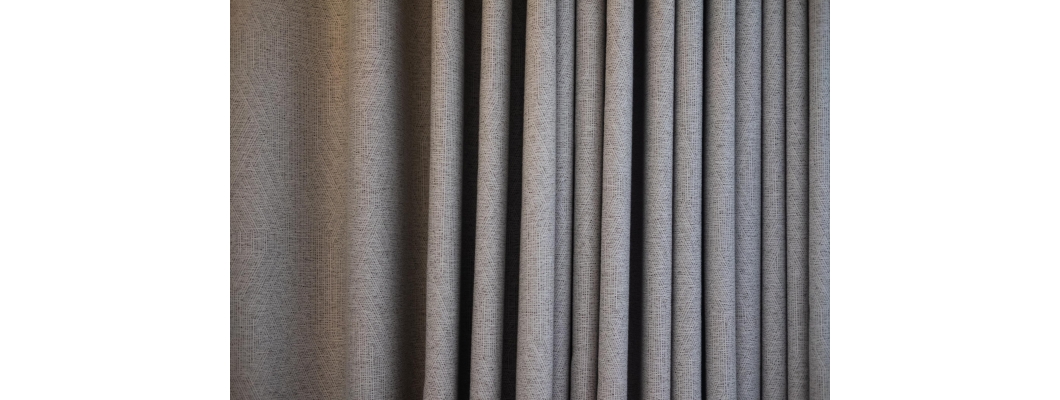
If you are learning how to install wave curtain track, it is important to understand that a wave track system is one of the most elegant solutions for contemporary interiors in the UK, combining a clean look with a continuous, orderly drape. Wave curtains are designed to create soft, uniform folds without traditional pleats, using a combination of the track, cord-operated gliders and heading tape to maintain consistent spacing when opening and closing.
The good news is that measuring and installing a wave curtain track does not need to be complicated. First, you must determine the correct position of the track, then calculate the actual track length, check the space required for the wave to form in front of and behind the track, and only then move on to fabric width, tape length and installation. This structured approach helps avoid common issues such as the curtain scraping against the wall, insufficient recess depth, or not enough space for stack back when the panel is open.
What is a Wave Curtain Track and Why Does Correct Measurement Matter?
A wave curtain track is a specialised system designed specifically for wave curtains and modern wave track installations used in contemporary interiors and window treatments. Instead of allowing the fabric to fall in uneven folds, it uses gliders spaced at regular intervals to create a uniform pattern from the top to the hem. The result resembles the appearance of eyelet curtains, but with the advantage that the curtain hangs directly below the track in cleaner lines and with a more controlled, contemporary finish, enhancing the overall desired wave effect.
This system is a modern and sleek solution designed to maintain a consistent fold whether the curtains are open or closed. This is why accurate measurement is essential. With wave curtains, even a few millimetres can affect both the visual result and the performance of the system. If the track is positioned too close to the wall or window, the wave effect loses its definition.
If the effective length of the track is calculated incorrectly, the number of hooks and the heading tape will no longer align with the system. Similarly, choosing between 60 mm and 80 mm without considering depth and clearance can result in a wave that feels too full, too shallow or visually compressed.
Before Measuring, Define the Track Position
The first step is not to grab a tape measure to measure the width of the window, but to decide where the wave curtain track will be positioned. This applies equally to ceiling-mounted, wall-mounted, ceiling fix (ceiling fix installations) or recessed installations. As the wave system projects forwards and backwards from the track, it requires sufficient space to operate correctly.
Ceiling fixing is a common method for installing curtain tracks, particularly in recess or ceiling-mounted configurations, and it requires careful positioning to ensure the curtains hang correctly and operate smoothly. Proper clearance is essential, as the wave effect depends on enough depth in front of and behind the track.
In the Silent Gliss technical guide, the minimum distance varies depending on the chosen configuration and already includes a standard 2 cm clearance at the front and rear. In the most common combinations, this minimum distance ranges from 70 mm to 100 mm. This means that a successful installation always starts with assessing the available depth on site.
In a shallow recess, it may be wiser to opt for a more discreet wave or even reconsider the chosen system. The 60 mm wave is shallower and requires less front-to-back depth, which makes it more suitable for compact recesses, whilst the 80 mm wave creates deeper folds and requires more clearance.
It is also important to remember that not all wave systems are the same. Within the SG-S range, there are solutions for light to medium weight, medium weight and heavy-duty applications, as well as specific options for ceiling, wall and recess installations. Brackets for wave curtain tracks can be supplied for either wall fixing or ceiling fixing, depending on the installation requirements.
The 6840 system, for example, is purpose-designed for ceiling mounting but can also be wall-fixed; the 6970, on the other hand, is suitable for ceiling, wall and recessed applications, as well as heavier-duty installations. In other words, the position of the track must always be determined in conjunction with the system type, the weight of the fabric and how the space is intended to be used. Specialist suppliers can provide all necessary components, including tracks and brackets, ensuring a complete and compatible installation.
How to Measure the Track Length Correctly
Once the position has been determined, it is time to measure the track length. For wave systems, the relevant figure is the working track length, i.e. the effective working length of the track. According to Silent Gliss’s guidelines, this value forms the basis for calculating hooks and heading tape.
For manual, corded and electric tracks, the working length usually corresponds to the length of the system; however, with Metropole lines, it may be necessary to deduct the finials to arrive at the correct measurement. For a straight window, you must measure the final width that the track must cover, and not just the glass opening.
If a more generous finish is desired, the track may extend beyond the window opening to allow the curtains to stack outside the glazed area when open. If the installation is in a recess, the measurement should be checked at more than one point to ensure the sides are truly parallel.
Small differences in the wall, plaster or frame can alter the final result, particularly in projects where the track needs to fit with a tighter finish. For wall fixing, it is important to plan in advance how far the track will extend on each side of the opening, ensuring the track length is consistent with the intended coverage. For ceiling fixing, care should be taken not to position the track too close to the wall, as this can restrict movement.
In both cases, the key point is that the length of the track must be measured in its actual installation position, as this measurement determines the behaviour of the entire system. With wave curtains, simply measuring the window opening is often where errors begin.
60 mm or 80 mm: Which Spacing Should You Choose?
Choosing between 60 mm and 80 mm is one of the most important decisions in the design of wave curtains. The 80 mm glider cord creates a deeper wave with greater front-to-back depth, while the 60 mm version produces a shallower wave with smaller, more subtle folds. In most cases, the 80 mm system is recommended, particularly when using a pocket factor of 7.
From a visual perspective, 80 mm is generally preferred when a more architectural finish is required, with defined curves and a more luxurious appearance. The 60 mm option is better suited to smaller recesses or projects where space is limited and a more understated result is desired. However, the key consideration is not only aesthetics, but also how the wave behaves within the available space.
The approximate fullness and minimum distance vary depending on the selected combination: 60 mm with a pocket factor of 4 achieves around 2.1 fullness and 70 mm minimum distance; 60 mm with a pocket factor of 5 increases to 2.3 and 80 mm; 80 mm with a pocket factor of 6 results in 2.1 fullness and 90 mm; and 80 mm with a pocket factor of 7 reaches 2.3 fullness and 100 mm.
In practical terms, the choice of spacing affects the wave effect, the amount of fabric required, the space needed for stacking, and the overall behaviour of the curtains when drawn open or closed. This is why sliding doors, bi-fold doors, wide openings and modern extensions often benefit significantly from the wave system.
When correctly specified, the system allows the curtains to stack neatly to the sides while maintaining a continuous, elegant wave across the window, ensuring a balanced and refined finish.
How to Calculate Fabric Width, Hooks and Heading Tape
Although many people treat measuring the track and making the curtain as two separate steps, in the wave system they are directly linked. You must first calculate the number of hooks based on the working track length and only then determine the tape length. This detail is important because the recommendation is to count the pockets on the tape, rather than relying solely on a linear measurement, as there is natural tolerance in the material along its length.
The spacing between hooks depends on the chosen system: 60 mm works with a hook spacing of 100 mm or 120 mm, whilst 80 mm works with 140 mm or 160 mm, depending on the pocket factor. Once you have the correct number of hooks, the calculation of the heading tape follows a fixed method: subtract 1 from the total number of hooks, multiply by the pocket factor, and then add extra pockets for hems and finishing allowances.
With Silent Gliss systems, the recommendation is to add 8 pockets to the 60 mm glider cord and 10 pockets to the 80 mm version. On electric tracks, the motor side requires additional pockets to allow the curtain to wrap correctly around the motor unit. From there, the fabric width must match the final width of the heading tape, always allowing for hems and natural fabric behaviour after sewing.
Many fabrics will shrink slightly in width after sewing, so this must be accounted for before cutting. It is also important to consider weight limits: the standard wave heading tape supports up to 2.5 kg per metre of track, but the system’s overall limit must always take priority.
When choosing fabric for wave curtains, lightweight to medium-weight materials such as linen, cotton, voile and polyester blends are generally most suitable, as they drape naturally and support the soft wave effect. Heavier fabrics can be used where appropriate, provided the track system supports the load, while very stiff fabrics with heavy embroidery or rigid patterns may not form the wave correctly and can disrupt the overall finish.
A simple test is to hold the top of the fabric and check whether it naturally forms a soft wave without resistance.
How to Install a Wave Curtain Track
Once the measurements have been taken and the system chosen, the installation process is relatively straightforward, whether using wall mounting or ceiling fix (ceiling fix installation) methods. The key point is to always work to the exact track line, rather than ‘eyeballing’ the fit afterwards. With SG-S systems, fitting options and track profiles vary, so the instructions for the specific model remain the final reference. Nevertheless, the general process usually follows this sequence.
To ensure a smooth installation, you will need a track kit, drill, screwdriver, pencil, tape measure and spirit level.
Mark the actual position of the wave curtain track on the ceiling or wall using a pencil, ensuring sufficient clearance for the wave to form in front of and behind the track. The marks should be level and evenly spaced, as bracket positioning depends on the track length and configuration. As a general guide, the track is typically positioned to allow adequate clearance above and to the sides of the window opening to enable proper stack back when open.
Check the level of the line and the final width before drilling, particularly in recesses or on walls that may not be perfectly straight.
Drill pilot holes at the marked points and securely fix the brackets using appropriate screws, ensuring they can support the weight of the curtain and track system.
Install the brackets according to the system requirements, making sure spacing and fixing points are compatible with the track profile.
Secure the track and check that the gliders move freely and smoothly before hanging the curtain. A wave curtain track only achieves the correct effect if the gliders operate without resistance.
Hang the curtain using the correct hook placement: in manual and corded systems, the first hook starts in the 3rd pocket on the 60 mm glider cord and in the 4th pocket on the 80 mm cord, followed by consistent spacing throughout.
Take your time when dressing the fabric, as even a well-calculated wave curtain requires initial adjustment to settle the folds evenly from top to bottom.
For a professional finish, the position of the heading tape is critical. With standard wave gliders, the tape is placed at the top of the curtain, while with SG 6099 wave roller gliders it should be sewn 7 mm below the top. The top hem should measure 75 mm for standard gliders and 95 mm for roller gliders, and Wave Top Hemming Tape SG 6363 should be used to prevent puckering and ensure a clean finish.
For installations with limited space or specific design requirements, a pencil pleat heading may be considered as an alternative, particularly in recess or ceiling-fixed applications.
Hanging the Curtain
Hanging the wave curtain is the final step in achieving a smooth and consistent finish. Begin by carefully attaching the wave heading to the wave curtain track, ensuring each hook is correctly placed in the designated pocket. For the system to perform as intended, it is essential that the correct number of hooks is used and that the tape length has been calculated accurately, as this determines the spacing and uniformity of the wave effect.
For a professional finish, ensure the hooks are evenly distributed along the heading tape. This attention to detail helps maintain consistent wave depth and regularity, whether installing a single curtain or a pair. If a deeper wave effect is required, the tape length and pocket configuration can be adjusted accordingly; however, this will increase fabric requirements and may require additional track length to allow sufficient stacking space when open.
Some wave curtain track systems, including Silent Gliss solutions, offer adjustable configurations that allow variation in wave depth, providing flexibility in achieving different aesthetic and functional outcomes.
It is important to ensure there is sufficient space for the fabric to move freely along the track, and that the heading sits evenly from end to end. When correctly assembled and adjusted, the system will deliver a clean, continuous wave that enhances the overall appearance of the window without compromising performance.
Maintaining the Curtain
Regular maintenance is essential to keep wave curtains operating smoothly and looking consistent over time. Begin by gently removing dust and debris from the fabric using a soft brush or a vacuum cleaner with a low suction setting. This helps preserve the structured wave effect and prevents dirt from affecting the fabric’s movement.
For deeper cleaning, use a mild detergent with warm water, but always test a small, hidden section of the fabric first to ensure compatibility and avoid damage.
The wave curtain track should be wiped clean with a dry cloth to remove dust or debris, avoiding any harsh chemicals that could damage the finish or affect the movement of the gliders.
To maintain even operation, regularly check that the hooks remain correctly positioned in the pockets and that the wave spacing remains consistent. If necessary, minor adjustments can be made to restore uniformity across the curtain.
Applying a suitable fabric protector may help reduce staining and extend the lifespan of the fabric, provided the manufacturer’s instructions are followed.
With regular care, the system will continue to operate smoothly, maintaining both functionality and a consistent appearance over time.
Common Mistakes When Measuring and Installing
The most common mistake is treating wave curtains as ordinary curtains on an ordinary track. They are not. The system relies on a wave-specific track and consistent measurements between track length, hook spacing, tape length and fabric width. Another recurring mistake is ignoring the required depth and realising too late that the curtain touches the wall, the door handle or the side of the recess.
It is also worth avoiding classic shortcuts such as choosing the spacing based solely on appearance, cutting the fabric before confirming the exact number of tape pockets, and using a fabric that is unsuitable for a system that relies on a smooth, continuous curve. In motorised projects, forgetting the extra pockets on the motor side is another common mistake. All of this may seem minor during the measurement phase, but it compromises the wave from the very first use.
Why Choose SG-S
For a wave project in the UK market, the advantage of using a specialist lies in minimising the margin for error. SG-S is one of the leading suppliers of the Silent Gliss range in the country; it deals with tracks, blinds, electric tracks, Metropole systems and spare parts, accepts retail and trade orders, and offers a three-working-day dispatch service for most made-to-measure systems. The company has 40 years’ experience with the Silent Gliss range.
Furthermore, SG-S’s offering is not limited to a single track profile. The brand works with hand-drawn, cord-operated, electric, recess and Metropole options, which makes a difference when the project requires ceiling fixing, wall fixing, recess fitting, greater weight capacity or integration with a specific aesthetic. Rather than adapting the space to a single system, it becomes easier to select a system that is truly suited to the space.
Summary
Measuring and installing a wave curtain track correctly is not just about making it fit, but about respecting how the system works. First comes the position of the track. Next, the working track length. Then, the decision between 60 mm and 80 mm depending on the available space and the desired effect. Only then do hooks, heading tape, fabric width and final installation come into play. When these steps are carried out in the correct order, the result is what is expected of wave curtains: a continuous, elegant and practical design for everyday use.
FAQ
Do wave curtains really need a specific track?
Yes. To achieve the characteristic wave effect, a wave curtain track system designed to accommodate the correct gliders and spacing is required.
Which is the best choice: 60 mm or 80 mm?
It depends on the space and the look. The 80 mm creates deeper waves and is Silent Gliss’s recommendation for most installations; the 60 mm is shallower and may work better in smaller recesses.
How do you measure the track length?
The measurement should be the working track length, with the track’s final position already defined. With Metropole lines, it may be necessary to deduct the finials to arrive at the usable length.
How do you calculate the fabric width?
In the wave system, the fabric width must match the final width of the heading tape calculated by the pockets, not just the width of the opening. After that, standard hem allowances and any width loss during sewing must be taken into account.
Do wave curtains work with ceiling and wall fixings?
Yes. The SG-S range includes wave systems for ceiling, wall and recess mounting, but exact compatibility depends on the track model and the weight of the curtain.
Can I use any fabric?
No. Soft fabrics with a good drape tend to work best. Silent Gliss lists voile, lined cotton, interlined silk and blackout lining as typically suitable options, whilst stiff or very heavy fabrics tend to compromise the wave effect.