
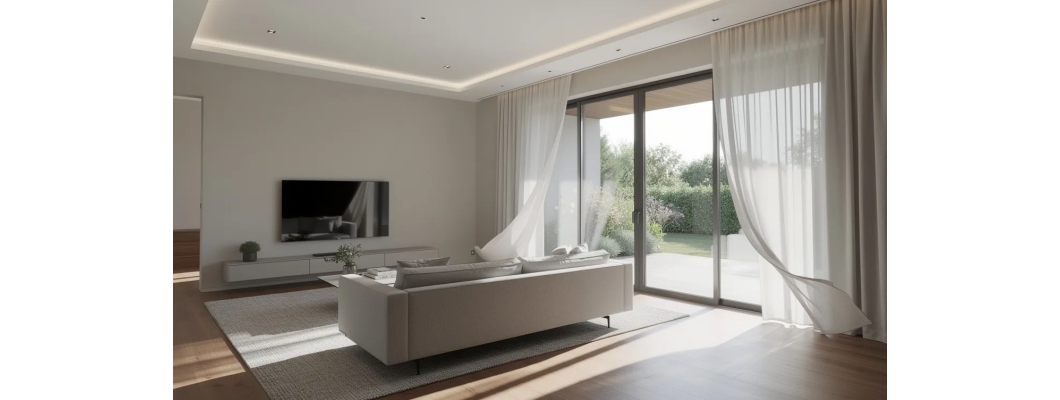
A recessed curtain track sits within a prepared channel in the ceiling rather than projecting below it. This conceals much of the curtain hardware and creates a neat transition between the ceiling and the fabric. If you are asking what is a recessed curtain track, the main distinction is where the rail is fitted, rather than the style of curtain hanging from it.
We supply Silent Gliss curtain systems and spare parts to retail and trade customers. Our recess curtain track range includes hand-drawn, corded and electric options. This guide explains the design choices and preparation involved so you can discuss the right system with us before your installer forms the recess.
How recessed curtain tracks work
Gliders travel along the rail and carry the curtain hooks. The track is positioned within the ceiling channel, allowing the fabric to hang below it while the mounting arrangement remains less visible. A recessed ceiling curtain track is therefore different from a conventional rail fixed to the finished ceiling or wall.
It is also different from a recess bracket for a curtain pole. A pole bracket generally mounts a visible pole between opposing surfaces. Recessed track systems are designed around a ceiling opening and a compatible fixing arrangement. The terms should not be treated as interchangeable when ordering.
Direct fixing and recess profiles
Some systems fix directly within the prepared opening; others use a separate recess profile which receives the main track. The appropriate arrangement depends on the selected product and its installation instructions. Silent Gliss explains these approaches in its guide to recessed curtain tracks.
A ceiling channel alone does not make any curtain rail suitable for recessed use. Confirm the system, fixings and access requirements before completing the ceiling.
Why choose a concealed curtain track?
The main benefit of recessed curtain tracks is visual simplicity. Reducing visible brackets and rails can suit a room where you want the curtains, glazing or architectural details to take priority. Floor-to-ceiling curtains can look particularly cohesive when their heading is close to the ceiling line. This discreet finish works particularly well with large windows in modern living spaces, where visible hardware could interrupt the view.
Recessing the track does not automatically improve insulation, eliminate light gaps or make the mechanism quieter. Fabric, fit, installation and the chosen system all affect how the finished curtains perform. Treat the recess as a design decision rather than a guarantee of performance.
Choosing curtains and operation
Hand-drawn, corded or electric
A hand-drawn arrangement suits a curtain you can reach and move comfortably. Manual recessed curtain tracks can be a straightforward option when motorised opening and closing is unnecessary. Corded operation moves the curtain using a control cord; electric operation uses a motor. Choose the method around access, curtain weight and everyday use, then check the requirements of the particular system.
For an electric curtain track, agree the power supply, cable route and access to controls before the ceiling is closed. Electrical work should be planned with a suitably qualified professional. Do not assume that every motor or control can connect to an existing home automation system.
Wave curtains and other headings
Wave curtains form a repeating fold using a compatible glider arrangement and curtain heading. We list Wave recess track systems, but compatibility must be checked for the complete curtain and track combination.
Allow space for the fabric both behind and in front of the rail, and for the curtain stack when it is open. A heading that looks attractive in a sample may need more room than the track itself. Ask your curtain maker to coordinate the fabric, heading and finished drop with the selected hardware.
Planning a recessed curtain track installation
Recessed tracks are easiest to coordinate while a ceiling is being designed or renovated. Retrofitting may involve opening the existing finish, assessing the supporting structure and making good afterwards. An installer should assess whether that work is practical before you commit to the layout.
Use the product's installation instructions rather than a generic recess dimension. A channel that suits one rail may not suit another, particularly where motors, bends or multiple curtain layers are involved.
Confirm the track model, operation and curtain weight before preparing the opening.
Check the supporting structure and fixing positions with the installer.
Allow for window handles, opening sashes, radiators and the curtain stack.
Plan separate space for each layer if using sheers and heavier curtains together. A double track arrangement requires sufficient recess width and depth for both tracks and their curtain headings.
Keep access available for fitting, adjustment and future maintenance.
Coordinate the finished ceiling level with the curtain maker's measurements.
Fitting and checking the system
The installation process varies by product. Builders and installers should agree the recess dimensions and ceiling lining details before work begins, particularly where the track must be integrated into a plasterboard ceiling. Broadly, the installer prepares the recess and support, fits the specified profile or track, and checks alignment before hanging the curtains. The curtain hooks and gliders must suit the system. Once fitted, test the full travel of the curtains and check that the fabric does not catch on the ceiling edge or nearby fittings.
We can help with product identification and selection, but the ceiling preparation and on-site fitting need to be arranged with your installer. Share the proposed layout and system details with us before ordering if compatibility is unclear.
Design ideas for different rooms
Across wide glazing, plan where the open curtains will sit so they do not unnecessarily cover the view. In a bedroom, consider lining and edge coverage alongside the recessed rail if light reduction matters. A concealed track does not by itself create a blackout arrangement.
For bay windows or curved layouts, confirm the required shape against the chosen system before preparing the recess. Some tracks can be bent to suit a curved window, but the permissible bend and whether it must be factory-formed depend on the model. Do not assume that every rail can follow every bend. A double-layer scheme also needs room for each track and for the fabric to move without rubbing together.
If the ceiling cannot accommodate a recess, a surface-mounted track may be a more practical solution. Compare the finished appearance with the amount of building work involved rather than choosing a concealed track purely because it is less visible.
What affects the cost of a recessed curtain track?
The cost depends on the selected Silent Gliss system, track length, operation and any specialist bends or accessories. The overall project budget should also allow for preparing the ceiling recess, electrical work where required and making good existing finishes. For an accurate comparison, ask for the track specification and installation costs separately; a recessed curtain track may involve more building work than a surface-mounted alternative.
Care and maintenance
Follow the manufacturer's care instructions for the rail, gliders and controls. Avoid pulling a curtain through resistance or adding lubricants without checking suitability. If movement becomes uneven, inspect for fabric catching, misplaced hooks or an obstruction, and seek product advice before dismantling the mechanism.
For corded systems, consider the safety of accessible cords, especially where young children are present. Keep cords out of reach and follow the supplied safety instructions. The Office for Product Safety and Standards' cord safety guidance explains the hazards posed by loops and the importance of correctly fitted safety devices.
Choosing a Silent Gliss recessed curtain track from our range
We supply complete Silent Gliss systems and spare parts. Our recessed curtain track range includes hand-drawn options for different curtain weights, alongside corded and electric systems. For example, the Silent Gliss 6243 is intended for lighter curtains, while other recessed models are designed for heavier fabrics. Suitability depends on the exact system and configuration, so check the product specification rather than relying on curtain weight descriptions alone. To help us identify a suitable option, provide the proposed track length and shape, curtain details, preferred operation and any existing system reference. You can contact us to discuss the product requirements before arranging installation.
Frequently asked questions
How do you hang curtains on a recessed track?
Curtain hooks attach to compatible gliders that run inside the recessed curtain track, allowing the curtains to open and close along the rail. The exact hanging method depends on the heading, glider type and track system. Before hanging the fabric, check the manufacturer's instructions and make sure the gliders can move freely. Confirm the finished curtain drop once the track position is established, so the fabric clears the floor and does not catch against the recess edge.
Can a recessed track be fitted into an existing ceiling?
Yes, recessed curtain tracks can sometimes be installed in an existing ceiling, although retrofitting is usually more involved than fitting a surface-mounted curtain track. An installer will need to check the ceiling construction, available depth, supporting structure and access for fixings. The installation process may involve opening the ceiling lining and making good the finish afterwards. For electric tracks, the power supply and future motor access also need planning. Have the proposed recess assessed before ordering a system.
Is a recess bracket the same as a recessed curtain track?
No. A recess bracket supports a visible curtain pole between two opposing surfaces, such as the sides of a window recess. A recessed curtain track sits within a prepared ceiling channel, so the rail and much of its hardware are concealed. The two arrangements require different measurements and fittings. If you want curtains to appear to hang directly from the ceiling, check that you are choosing a purpose-designed recessed track rather than a pole with recess brackets.
Can Wave curtains be used on a recessed track?
Yes, Wave curtains can be used with compatible recessed curtain tracks. Wave headings rely on a suitable glider system to create regular, evenly spaced folds, so the track, gliders and curtain heading need to be specified together. Allow sufficient space in front of and behind the track for the folds, as well as room at the end for the curtains to stack when open. SG-S supplies Wave recess track systems, but compatibility should be confirmed for the selected model.
Can heavy curtains use recessed curtain tracks?
Yes. The Silent Gliss recessed curtain track range includes options designed for different curtain weights, including heavier fabrics. However, not every model is suitable for a heavy-weight curtain or a long span. The curtain's finished weight, track length, fixing support and whether the rail needs to be bent all influence system selection. For a double track arrangement with sheers and heavier curtains, each track must be specified for its own load and given enough space to operate. Confirm the details with SG-S before ordering.