
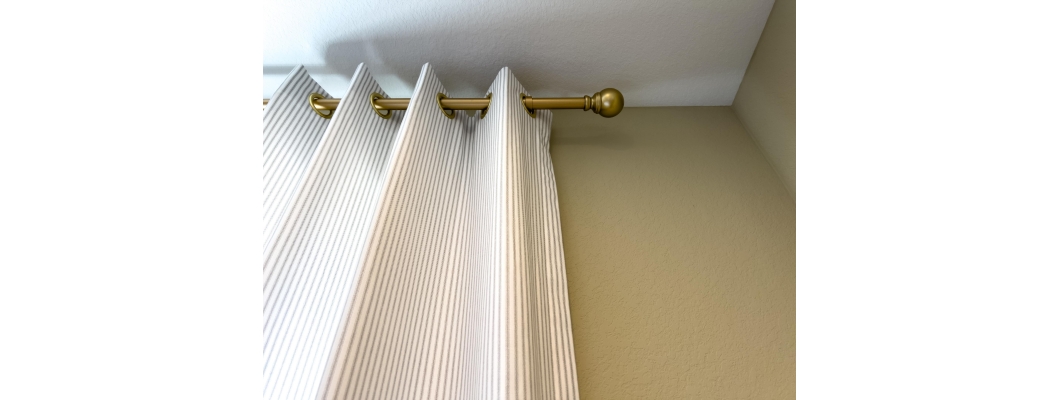
Corner windows add interest to any room. They let in more natural light, create a sense of space and can transform a living room, bedroom or bay-window area into an elegant focal point. The challenge arises when it comes to choosing and fitting the curtains.
A standard window frame usually accommodates a simple curtain rod, but a corner window requires more attention to measurements, angles, fabric weight, bracket positioning and the type of fixing. The good news is that learning how to hang curtain rods for corner windows is simpler when the project is broken down into stages.
First, measure each side of the window. Next, choose between curtain rods, a curtain pole or a curtain track. Finally, install the brackets at the same level, test the fit in the corner and only then hang the curtains. The result should look seamless, secure and deliberate, not a makeshift solution.
Understand the Type of Corner Window Before You Start
Not all corner windows are the same. Some form a perfect right angle, with two windows on adjacent walls. Others are part of bay windows, have an irregular corner, or are situated in areas with little space between the glass, the ceiling and the side wall. Before buying new curtain rods, consider how the curtains need to function on a day-to-day basis.
If you want to keep the curtains open most of the time, the rod or track should extend beyond the outer edge of the window, creating space for the fabric to ‘rest’ without covering the glass. If the priority is to block out light in the bedroom, blackout curtains and a system that minimises gaps in the corner will be more suitable.
For a modern and discreet finish, a curved curtain track or one installed on the ceiling may work better than a decorative curtain pole. It is also worth deciding whether the intention is to treat the two windows as one continuous window or as two separate windows. Generally, the first option creates a more elegant look, as the corner appears to be part of a single composition.
How to Measure a Corner Window Correctly
Measuring is the most important part of the project. Use a sturdy measuring tape, make each pencil mark carefully and double-check everything before drilling into the wall. Start by measuring the width of each window, always including the window frame. Next, measure the distance between each inner edge and the corner, as this space determines how the rods will meet.
For a more spacious look, it is common to position the curtain pole or track around 20–30 cm above the window frame and extend it by around 10–15 cm beyond the outer edge of the window on each side. This allows the curtain panels to gather outside the glazed area, preserving natural light when the curtains are open. In corner windows, however, there is no need to leave much space inside the corner itself. The aim is to ensure the system meets the angle cleanly.
Also measure the final height of the curtains. As a general guide, the total curtain panel width should be around twice the window width, so the fabric hangs with enough fullness rather than looking flat. If you want the fabric to touch the floor lightly, measure from the point where the rod or track will be installed down to the floor. If you are using curtain rings, hooks or specific headings, consider the difference between the top of the fabric and the actual hanging point. These final measurements prevent curtains from being too short, too long or uneven between one side and the other.
Curtain Rods, Curtain Poles or Tracks: Which to Choose?
There are three main ways to hang curtains on corner windows. The first is to use two separate rods, one above each window. This option is simple, traditional and can help you save money, especially if the curtains do not need to wrap around the corner.
The finish looks best when decorative finials are only visible at the outer ends, whilst the corner is fitted with discreet end caps or a cleaner-looking joint. The second solution is to use curtain rods or a curtain pole with a corner joint. This corner piece connects the two sides of the system and creates a more continuous line. A hinged corner connector can also help the curtains move more smoothly around the angle, which is useful for corner window curtains.
It is a good option for those who want the curtains to appear to wrap around the corner window, rather than ending abruptly at the angle. The third option is the curtain track, particularly useful for bay windows, non-standard corners or designs with a more minimalist look. For a more professional finish, a purpose-made curved or flexible curtain track will usually look cleaner and perform better than an improvised corner rod connection.
Curved tracks allow the fabric to slide more smoothly around the corner and can be mounted on the wall or ceiling. Flexible curtain tracks can also be ceiling-fixed and extended past corners, depending on the system and the shape of the window. For contemporary interiors, they help conceal some of the hardware and keep the focus on the fabric, not the mounting.
Tools and Fixings Required
Before installing any system, make sure you have the right tools: a cordless drill, a suitable drill bit, screws, brackets, a step ladder, a stud finder, a spirit level or laser level, a pencil and a tape measure. A laser level can be especially useful for keeping the rods perfectly level across both walls. The type of fixing depends on the wall. On a brick wall, you will usually need suitable wall plugs.
On plasterboard, do not rely solely on a standard screw, as it may come loose under the weight of the curtains, particularly if they are blackout curtains or heavy fabrics. Whenever possible, use a stud finder to locate wall studs. Fixing the brackets to the studs provides greater stability for the rod, particularly with long curtains or wide systems.
When the studs are not in the ideal position, choose drywall anchors, often referred to in the UK as plasterboard fixings, that are compatible with the weight of the rod, the track and the curtain panels. This detail is even more important in a corner window, as the system is under tension in two directions.
How to Hang Curtain Rods for Corner Windows: Step by step
Start by marking the height of the first bracket. Use the spirit level to transfer the same height to the other wall. This step is crucial. If one side is even a few millimetres lower, the corner joint will look crooked once the curtains are hung. Next, mark the position of the outer brackets, which are often placed around 15–30 cm past the window edges for a wider, more expansive look.
For two windows, calculate the rod length from the individual width of each side rather than treating the corner as one straight measurement. Each rod or track should extend beyond the outer edge of the frame, leaving enough space for the curtains to open without blocking the light. Next, mark the brackets near the corner, then repeat the same process on the other side. If you are using two rods, check that they are close enough to appear aligned, but not so close that they press against the wall.
If you are using a corner joint, test the fit before tightening all the screws. Drill the holes carefully, install the wall plugs if necessary, and secure the brackets. Before hanging the curtains, position the rod, curtain pole or empty track and check that everything is secure.
This check prevents you from discovering too late that the corner is misaligned or that a bracket is out of position. With the system installed, fit the curtain rings, hooks or heading accessories according to the heading style and the manufacturer’s instructions. Hang your curtains and test the movement.
They should slide without catching on the corner. If the fabric gathers at the corner, adjust the number of panels or consider a more suitable track. In many cases, two panels at the outer edges create a cleaner finish than having too much fabric inside the corner.
How to Improve the Finish of Corner Curtains
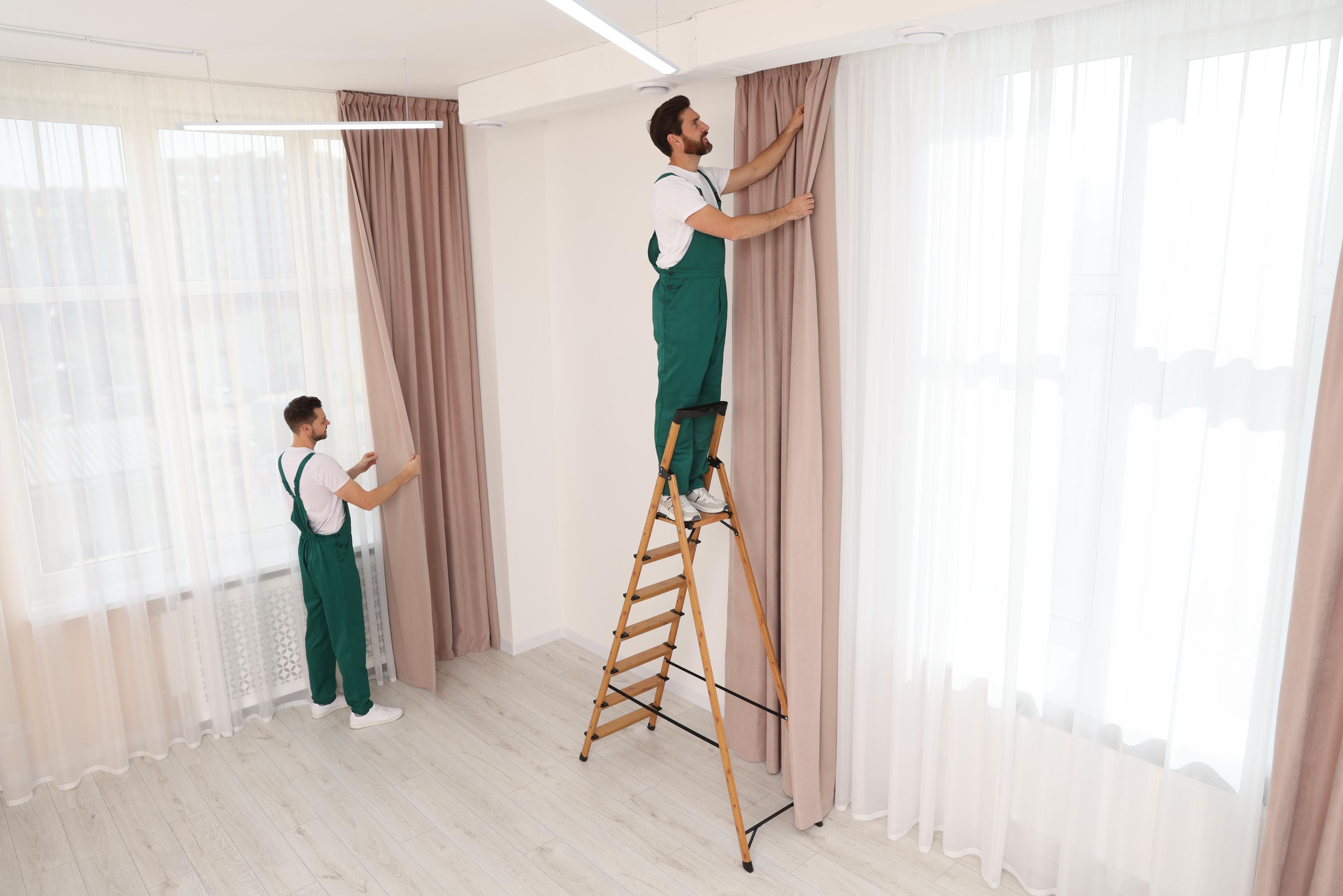
The secret to a well-designed corner curtain is visual continuity. The aim is to cover the corner neatly without breaking the flow of the window treatment. Use corner window curtains made from the same fabric, in the same colour and of the same length on both sides. Install the rod or track in a single line and avoid different heights, even if one of the windows is smaller. This creates the impression that the whole arrangement was designed as a complete solution, especially when you hang corner curtains across both walls.
For small rooms, installing the system slightly closer to the ceiling can visually elongate the wall. For bedrooms, blackout curtains help reduce light but require more robust support. For rooms where natural light is a priority, light or medium-weight fabrics may be better, as they soften the space without weighing down the hardware.
Important Safety and Care Considerations in the UK
In homes with young children, it is important to be mindful of cords, chains and any mechanisms with loops. In the UK, new blinds with looped cords must be fitted with safety devices, and older installations may require cleats, tensioners or cordless alternatives.
Even though the focus here is on curtains, it is worth considering simple manual systems, well-fitted tracks or options that avoid accessible cords near beds, cots and climbable furniture. Safety also includes the physical installation.
A poorly fixed curtain pole can fall, damage the wall and compromise the room’s finish. Therefore, never choose fixings simply based on what came in the packaging. Consider the type of wall, the weight of the fabric and the total length of the system.
Why Choose SG-S
SG-S is a practical choice for anyone looking for Silent Gliss systems, curtain tracks, poles, electric tracks, Metropole systems and spare parts in the UK. Rather than relying on generic solutions, customers can find complete systems and specific components for different types of window treatments, including ceiling-mounted installations, walls with unusual shapes, and light or heavy-weight curtains.
For corner windows, this is particularly useful. A well-chosen system can make the difference between an installation that merely works and a finish that looks professional. Curved tracks, hand-operated systems, Wave options and Metropole or Metroflat solutions can help tailor the design to the room’s style, the weight of the curtains and the actual shape of the window. If you are unsure which system is right for your space, SG-S can help you choose a suitable option for the installation.
Summary
Knowing how to hang curtain rods for corner windows starts with taking accurate measurements and ends with choosing the right system for your new curtains. Measure each window frame, mark the same height on both sides, choose suitable fixings for wall studs, plasterboard or masonry, and test the movement before hanging your curtains permanently.
Two rods can work well for a traditional look. A curtain pole with a corner joint creates more continuity. A curved curtain track may be the best solution for bay windows, complex corners or modern interiors. With planning, good tools and the right products, a corner window ceases to be a problem and instead enhances the light, space and design of the room.
FAQ
Can I use two separate curtain rods for a corner window?
Yes. Two rods are a simple and effective solution when you want to treat each side of the corner window separately. Ideally, keep the rods at the same height and use finials only at the outer ends to avoid a visually heavy corner.
Is a curtain track better than a curtain pole for corner windows?
It depends on the design. A curtain pole can be more decorative, whilst a curtain track usually offers smoother movement, particularly when it needs to curve around the corner. For bay windows or irregular angles, the track is usually the most flexible solution.
How do I measure a corner window for curtains?
Measure the width of each window, the distance to the corner, the space beyond the outer edge, and the height from the installation point to the floor. Then check the final measurements, taking into account rings, hooks or the type of curtain heading.
Do I need wall studs to hang curtain rods?
Wall studs provide the most secure fixing, especially for heavy curtains. Where there is no stud in the correct position, use anchors or plasterboard fixings suitable for the type of wall and the weight of the system.
What curtains work best for blocking light on corner windows?
Blackout curtains work best, but they need to be combined with hardware that minimises gaps at the corners, top and sides. Ceiling tracks or systems with good side coverage help to improve light blocking.
How high should I hang curtains above a corner window?
Whenever possible, install the rod or track above the window frame to create a more elegant visual line. The most important thing is to keep both sides at the same level and ensure that the final length of the curtain is correct in relation to the floor.