
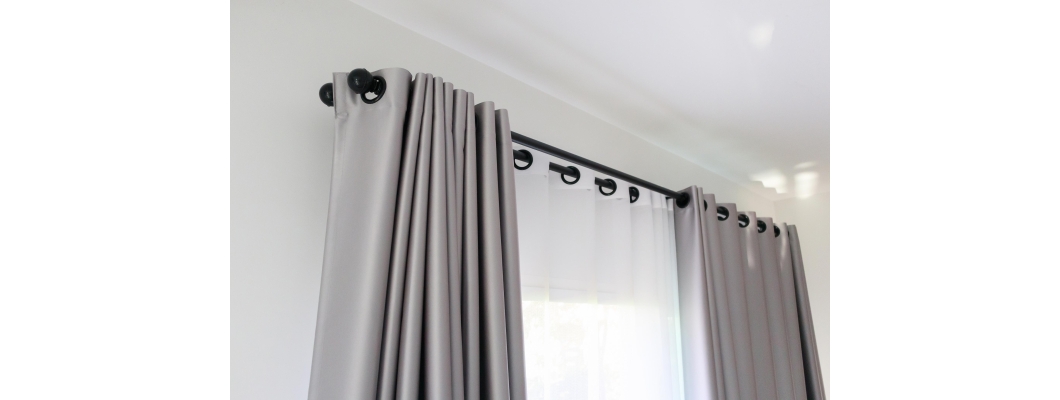
Installing a curtain pole may seem like a simple task, but the difference between a neat finish and a wobbly result almost always lies in the details. This includes measuring correctly, choosing the right bracket positions, using the appropriate drill bit for the wall type, and ensuring the pole is properly aligned before hanging the curtains.
In the UK, where many homes feature a mix of brickwork, plasterboard, bay windows and different types of window recesses, it’s worth planning the installation carefully before you start drilling into the wall. A good result depends on more than just placing the pole above the window frame.
The curtain pole needs to be wide enough so that the chosen curtains can open without blocking the light, the right height to enhance the window opening, and with fixings strong enough to support the weight of the fabric on a daily basis.
Before You Start: Check the Window, Curtains and Wall Type
Before you get out the tape measure, take note of the type of window, the ceiling height, the space available at the sides, and the type of curtain heading you will be using. Eyelet curtains, pencil pleat curtains and curtains with curtain rings do not hang in the same way on the pole, so the final positioning needs to take into account the fabric, the drop and the way the curtains will hang.
It is also important to check whether the installation will be outside or inside the window recess. Outside the recess, there is usually more room for finials, curtain rings and stacking the curtains back when they are open. Inside the recess, the installation can be more discreet, but the space is smaller and a curtain track may be a more practical option.
The wall type also directly influences the choice of screws, wall plugs or rawl plugs. Solid walls made of brick, concrete or stone usually require masonry drill bits and robust fixings. Plasterboard, on the other hand, may need specific fixings, especially if the curtains are heavy.
How to Measure for a Curtain Pole
The first measurement is the width. As a rule of thumb, the curtain pole should extend beyond the window frame on both sides so that the curtains can open without obscuring too much of the glass. It is recommended that the pole extends about 15 to 20 cm beyond the frame on each side for a balanced finish and better light intake.
The height also deserves attention. Whenever space allows, the pole should sit about 10 to 15 cm above the top of the window to visually elongate the wall and create a more elegant effect. In tight spaces, a minimum margin of 50 mm above the window frame is acceptable, but ideally you should assess the curtain drop before making the final marks.
Use a metal tape measure to mark the height on one side of the window, repeat the measurement on the other side and check everything with a spirit level. Draw a faint level line as a guide before marking the final bracket positions. If the floor, sill or ceiling is slightly uneven, the most important thing is that the curtain pole looks straight when viewed from inside the room.
Marking the Correct Bracket Positions
The bracket positions determine whether the curtain pole will be secure and visually aligned. Start by setting the end bracket positions at a suitable distance from the edge of the window frame, then mark the fixing point on each side. The brackets should be spaced far enough apart to accommodate the finial and leave at least one curtain ring between the bracket and the end of the pole. This helps to keep the curtain held in place at the side when it is closed.
For wider windows or heavier fabrics, install a central bracket in the middle of the pole. This bracket prevents the pole from bending under the weight of the curtains and helps to distribute the load more evenly. Wickes also recommends a central bracket for wider windows or heavy curtains, especially when the pole is longer. As a practical rule, a central bracket is often recommended for poles over 150 cm long.
Before drilling, position each bracket on the wall, mark each drill point with a pencil and double check all measurements. This is the time to correct any misalignment. Once you have drilled the holes, adjusting the brackets securely into the right position becomes much more difficult.
Safety Checks Before Drilling
Safety should not be treated as a mere formality. Before drilling, clear the area around the window, move furniture out of the way, protect the floor and ensure that the stepladder is in good condition. Ladders and stepladders can be a practical option for short, low-risk tasks, provided they are the right type and are used safely.
It is also essential to check for hidden electric cables and water pipes within the wall. Electrical Safety First warns that drilling, screwing or nailing into concealed cables is a common mistake in DIY projects, and recommends using a quality cable detector to reduce the risk of electric shock. A multi-purpose detector can also help identify potential pipes, studs or other hidden obstructions before you drill. If you are unsure about the location of cables or pipes, stop and seek professional advice.
Choosing the Drill Bit and Fitting the Brackets
Choose the drill bit according to the type of wall and the size of the wall plugs. For brick, concrete or stone, a masonry drill bit is usually required. For other surfaces, use the bit recommended by the manufacturer of the curtain pole or fixings. A good tip is to align the plug with the drill bit and mark the depth with masking tape, to avoid drilling deeper than necessary.
Once you have drilled the screw holes, insert the rawl plugs or wall plugs until they are flush with the wall. Position the bracket, insert the screws and tighten them with a screwdriver, without applying too much force at first. Once all the brackets are loosely secured, check again with a spirit level. Only then should you tighten the screws fully, so the pole brackets are fixed securely to the wall.
Cutting and Preparing the Curtain Pole
If the curtain pole is longer than required, you will need to cut it with a hacksaw, following the manufacturer’s instructions. Measure twice before cutting. If the pole comes in two parts, cut the same amount off each side to keep the joint in the centre and ensure the central bracket is in the correct position.
Once the length is adjusted, slide the curtain rings onto the pole, ensuring an even distribution of rings on each side. Next, attach the finials. On some models, the finials are secured with small grub screws or thumb screws, which should be tightened sufficiently to secure the piece without damaging the finish.
Putting the Pole in Place and Hanging the Curtains
With the brackets fixed and the pole prepared, place the curtain pole onto the supports so it rests securely on the brackets before centring it. Check that there is the same amount of pole overhang on each side, particularly when the finials are decorative. Next, tighten the bracket screws to prevent the pole from rotating or sliding.
If you are using pencil pleat curtains, attach the hooks to the curtain rings. If you are using eyelet curtains, the curtain itself should already be threaded through the pole before it is placed in the brackets. Open and close the curtains a few times to test the movement, check the drape and adjust the rings if necessary.
Fitting Inside a Window Recess: Curtain Pole or Curtain Track?
Fitting curtains into a window recess requires greater precision. As well as the width, measure the available depth to ensure the curtains do not touch the glass, handles or sill. Also consider whether there is enough room for finials and for the fabric to gather when the curtains are open.
When space is limited, a curtain track may be preferable to a curtain pole. This is especially useful when the window recess is narrow or when a smoother, more discreet finish is needed. Tracks are discreet, work well in recesses and help distribute the weight via gliders.
Why Choose SG-S
SG-S is one of the UK’s leading suppliers of Silent Gliss curtain tracks, window blinds, electric tracks, Metropole systems and cubicle systems, as well as supplying Silent Gliss spare parts. This is important because a correct installation begins with choosing the right system for the window, the weight of the curtains and the desired finish.
If you want to see the fitting steps clearly before you start, a helpful how to video or technical guide can make measuring, bracket positions and fixing methods easier to follow.
For those seeking a more technical solution than a standard DIY store pole, SG-S offers options including curtain tracks, curtain poles, recess systems, wave tracks and electric systems. This kind of expertise helps the customer choose not just something that looks good on the first day, but a system that will function well for many years to come.
Summary
Fitting a curtain pole correctly starts with taking accurate measurements. Measure the width of the window, allow sufficient overhang on each side, choose a proportionate height above the window frame and mark the bracket positions carefully. Before drilling, check the wall type, choose the correct drill bit and check for electrical cables and pipes.
Then, use suitable wall plugs or rawl plugs, secure the brackets, cut the pole only if necessary, attach the curtain rings and finials, and test the curtains’ movement. For wider windows, heavy curtains or installations in window recesses, consider a central bracket or even a curtain track. The result will be a safer, more aligned and durable installation.
FAQ
How high should a curtain pole be positioned above the window frame?
Where possible, the curtain pole should be positioned around 10 to 15 cm above the top of the window. In smaller spaces, a minimum distance of 50 mm may suffice, provided the curtain drop and the type of heading are taken into account.
How far should a curtain pole extend beyond the window?
A good guideline is to extend the pole about 15 to 20 cm beyond the window frame on each side. This allows the curtains to open more fully and helps to minimise the loss of natural light.
Do I need a central bracket?
You should use a central bracket for wider windows, long poles or when the curtains are heavy. It helps to prevent the pole from bending in the middle and improves the stability of the installation.
What drill bit should I use?
The drill bit depends on the wall type and the wall plugs. For brick, concrete or stone, use a masonry drill bit. For plasterboard, use suitable fixings and follow the manufacturer’s instructions.
Can I fit a curtain pole inside a window recess?
Yes, but you need to measure the width, depth, finials, curtain heading and any potential obstructions. When the recess is narrow, a curtain track can be a more discreet and efficient alternative.
Is a curtain track better than a curtain pole?
It depends on the purpose. A curtain pole is more decorative and works well on many windows. A curtain track is usually better for heavy curtains, recess fitting, bay windows, ceiling-mounted systems, or when you want a smoother and more discreet movement.