
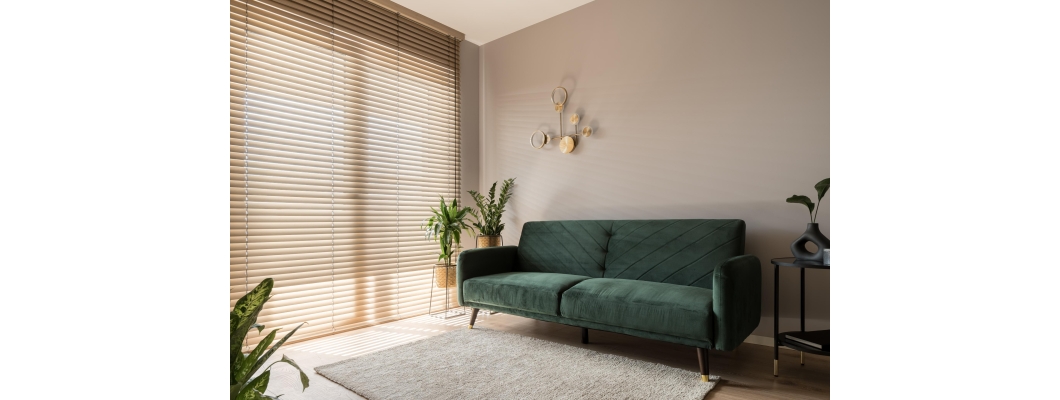
The main difference between shutters and blinds is their construction. Interior shutters use rigid panels, often with adjustable louvres, while blinds use fabric or slats that lift, tilt or draw across the window. Both can manage light and privacy, but they occupy different amounts of space and operate differently.
We supply Silent Gliss blind and curtain systems and spare parts. This comparison explains the practical differences between window coverings so you can decide which type suits your room. When considering a blind system from our range, we can help with product identification and selection before you arrange installation.
What are interior shutters and plantation shutters?
Interior window shutters sit within or around a window opening. Plantation shutters are a familiar style of interior shutter with adjustable louvres, usually fitted in a frame around the window. Many designs have hinged panels and adjustable louvres, allowing you to change the angle of incoming light or open the panels for a clearer view. Solid-panel designs work differently, so check the construction rather than assuming all shutters provide the same adjustment.
Full-height shutters cover the window from top to bottom. Café-style shutters cover the lower part, while tier-on-tier designs have separate upper and lower panels. The layout affects privacy, natural light and the space needed to open them. Because the panels and window frame remain in place, shutters can feel like a more permanent fixture than removable fabric blinds.
What are window blinds and how do they differ?
Unlike shutters, which typically use hinged rigid panels, window blinds include several distinct mechanisms. A roller blind rolls fabric around a tube; a Roman blind gathers fabric into folds; a Venetian blind uses horizontal slats that tilt and lift. Vertical blinds use hanging slats that tilt and draw across the opening.
That variety matters when comparing shutters with blinds. A fabric roller blind does not control light in the same way as a slatted Venetian blind, and a blackout fabric does not necessarily remove light around the edges. Look at the complete system, fabric and fitting arrangement. Fabric blinds are often chosen for their range of colours and textures, while slatted designs offer more precise light control.
Our roller blind systems provide a starting point if you prefer a fabric covering. You can also browse our complete systems to compare the blind and curtain hardware we list.
Light control and privacy
Adjustable louvres and slats
Louvred shutters and Venetian blinds allow you to adjust the angle of the openings while the covering remains across the window. This can help control light, direct sunlight and reduce a direct view into the room. How much light enters depends on the louvre or slat position and the surrounding window frame. The effect depends on the slat angle, window position and where someone is looking from.
Both shutters and blinds can provide privacy, but the level of privacy and light control depends on the window covering and its fit. Privacy should be checked in the conditions in which you need it. A setting that screens a room during daylight may look different at night when the room is brightly lit.
Fabric and room darkening
Roller and Roman blinds offer different levels of light transmission depending on the fabric. Sheer material may soften daylight while still allowing a view through it. Denser or blackout fabric reduces light through the material, but gaps at the sides or around fittings can remain.
Neither shutters nor ordinary blinds should be assumed to create complete darkness. For a bedroom, assess fabric, panel joints, edge coverage and installation together. Curtains can provide an additional layer where there is room for both coverings to operate.
Space, access and window operation
Shutter panels may need room to swing or fold open. Check the clearance around furniture, deep sills and window handles. Blinds also need space for their headrail, brackets and fabric or slat stack. When raised, some coverings still occupy part of the glazed area.
Before choosing a covering, consider:
How the window opens and whether handles remain accessible.
Whether the panels, fabric or slats could obstruct ventilation or opening sashes.
Where a raised blind or open shutter panel will sit.
Whether the covering will clash with a radiator, furniture or curtains.
How you will reach and operate it comfortably.
A window that opens inwards may need a different fitting arrangement from one that opens outwards. Have the proposed layout checked against the actual window rather than relying only on its overall width.
Bay windows and unusual shapes
Bay windows need careful planning at the corners. Individual coverings can meet awkwardly where the frames change direction, and protruding handles may reduce the usable recess. Shutters may be made to follow a bay, while blinds may be fitted to its separate window sections. Suitability depends on the particular product and measurements.
For an arched or unusually shaped opening, confirm the available configurations with the relevant supplier. Do not assume that a standard blind mechanism or shutter panel can be adapted to every shape.
Cleaning, materials and maintenance
Rigid louvres and Venetian slats have surfaces that need regular dusting. Fabric blinds have different care requirements, and some fabrics should not be washed or scrubbed. Follow the manufacturer's instructions for the exact material and mechanism.
For routine cleaning, shutters and Venetian blinds can collect dust on individual louvres or slats, while some fabric blinds may need careful spot cleaning. In kitchens or bathrooms, check the product's suitability for humidity, splashes and the cleaning products you use. A timber finish, composite panel and fabric covering should not be treated as having identical moisture resistance.
There is no reliable universal lifespan comparison between shutters and blinds. Materials, use, care and installation affect durability. If a mechanism becomes difficult to operate, investigate the cause rather than forcing it. For an existing Silent Gliss system, we can help identify the relevant system or spare part when you provide its reference or clear photographs.
Comfort and safety
Window coverings can change how a room feels by shading glare or adding a layer across the glazing. Depending on the materials and fit, some shutters and blinds may contribute to insulation and reduce heat loss through a window, but neither category guarantees improved energy efficiency or noise reduction. The effect on temperature depends on the window, fabric or material, fit and use. Avoid choosing on the basis of a fixed energy-saving figure unless it is supported by evidence for the specific product and conditions.
Accessible cords and chains need particular attention where young children are present. Follow the supplied safety instructions and fit the specified safety devices correctly. The Office for Product Safety and Standards' blind cord guidance explains cord and loop hazards, securing controls and keeping furniture away from windows. A cord-free control does not remove every other installation or use hazard.
Shutters vs blinds: which should you choose?
Choose around how you use the window rather than treating one category as a universal winner.
Consider shutters if you prefer a rigid panelled appearance and have suitable space for the panels to open.
Consider Venetian blinds if you want tilting slats with a covering that can also be raised.
Consider roller blinds if you prefer a simple fabric surface and want to select the fabric's light transmission.
Consider Roman blinds if you prefer folded fabric, allowing for the stack when raised.
Consider curtains alongside a blind when you want another fabric layer and have enough clearance.
For many homeowners, cost and style also influence the choice. Bespoke shutters often require more extensive fitting and can involve a higher initial cost, whereas some roller blinds offer a more cost-effective solution. Compare quotes for the particular window, materials and installation rather than assuming every blind costs less. A room-by-room choice may be more useful than fitting the same type everywhere. A bedroom's need for light reduction may differ from a living room's need for daylight and a view.
Choosing Silent Gliss blinds and curtain systems
We supply Silent Gliss complete systems and spare parts to retail and trade customers. If you are considering one of our blind systems, contact us with the window layout, preferred operation and any existing product reference. We can help with product selection; measurements and on-site installation should be coordinated with your installer.
Frequently asked questions
Can you open windows with shutters?
Often, yes, but the answer depends on the window and shutter arrangement. Interior shutters normally have hinged panels, and those panels may need to open before you can reach the window handle or open an inward-opening sash. Check the clearance around the window frame, handles, furniture and sill before ordering. Unlike shutters, many roller blinds can simply be raised out of the way, although their brackets and fabric stack still need space.
What are the practical disadvantages of shutters, including plantation shutters?
Shutters can take up opening space, and their frames or louvres may cover part of the glazing even when you want more natural light. Plantation shutters with many adjustable louvres can also collect dust, so routine cleaning may take longer than wiping a simple roller blind. Bespoke shutters may involve a higher upfront cost and more involved fitting than some blinds. Whether these are disadvantages depends on your window layout, budget and the appearance you prefer.
Are shutters or blinds better for bay windows?
Both shutters and blinds can work well in bay windows, provided the chosen system fits the angles and allows the windows to open. Bespoke shutters may follow individual window sections, while roller or Venetian blinds can be fitted separately across the bay. Check the corner junctions, window frame depth, handles and any gaps between adjacent window coverings. The best option depends on how much light control and privacy you need and whether you want the covering to sit inside or outside the recess.
Do shutters or blinds provide complete blackout?
Neither shutters nor blinds automatically provide complete blackout. Even when shutter panels close tightly or a roller blind uses blackout fabric, light may still enter around the window frame, edges, joints or fittings. For a bedroom, consider the whole installation, including the covering material, side gaps and whether curtains could provide another layer. Ask about the specific system's light-control performance rather than assuming that all shutters or blackout blinds will block every gap.
Can blinds be used with curtains?
Yes. Combining blinds with curtains can give you more flexibility over natural light, privacy and the appearance of the room. For example, a roller blind may provide daytime screening while curtains add another fabric layer when closed. Check there is enough space for the blind brackets, curtain track and both coverings to move without catching. SG-S supplies complete Silent Gliss curtain and blind systems, so you can compare suitable hardware before arranging fitting.