
Choosing blinds for your home may seem straightforward until you start comparing different materials, mechanisms and levels of light control. Some systems wind the fabric onto a compact roller, others form decorative pleats, and some use slats that can be tilted throughout the day.
The best blind isn’t necessarily the most modern or expensive. The right choice depends on the shape of your windows, how the room is used, the level of privacy required and how much light you want to let in. A bedroom might need blackout blinds, whilst a living room facing the street could benefit from a system that preserves natural light without leaving the interior completely exposed.
This guide explains the main types of blinds available for UK homes and shows where each option tends to work best.
How To Choose The Right Blinds For Your Home
Before comparing colours, patterns, and fabric options, think about what the blind needs to do. Appearance is still important, but function helps you quickly rule out the least suitable options.
Consider the following questions:
Do you need to block out the light completely or just reduce the glare?
Is the window visible to neighbours or overlooking a busy street?
Does the room accumulate steam, grease or damp?
Will the blind be fitted to a standard window, skylight, bay window, patio door or folding door?
Will you need to open and close the blind several times a day?
Are there young children or people with reduced mobility in the home?
Do you prefer manual operation, battery-powered operation or a system integrated into an electrical system?
Safety requires particular attention. In the UK, new blinds with looped cords or chains must incorporate, or be supplied with, appropriate child safety devices. The Office for Product Safety and Standards also advises keeping cots, beds and other furniture away from blind cords.
Different Types Of Blinds For Windows Explained
Although there are dozens of brand names available, most window blinds fall into a few main categories. The differences lie in the way the blind opens, the material used and the degree of light control provided.
Roller Blinds: A Simple And Versatile Choice
Roller blinds consist of a single piece of fabric that rolls up onto a tube fitted at the top of the window. The simple design takes up little space and keeps the window relatively unobstructed when the blind is fully open.
This versatility makes roller blinds suitable for almost any room. A light-filtering fabric softens the light without darkening the room, whilst a dim-out or blackout option significantly reduces the amount of light entering. Materials suitable for damp environments can also be used in kitchens and bathrooms.
It is important to distinguish between blackout fabric and total blackout. Even when the fabric does not allow light to pass through it, some light may enter from the sides, particularly if the blind is fitted within the window recess. Systems with side channels or solutions specifically designed for blackout provide more complete coverage.
Silent Gliss describes its roller blind systems as solutions featuring clean lines, minimal obstruction of the window and various operating mechanisms, including spring, chain, battery and electric.
Roman Blinds Add Softness And An Elegant Style
Roman blinds use a fabric panel that forms horizontal folds as it is raised. The result is a softer, more decorative look than the minimalist finish of a roller blind.
They are a great choice for living rooms, dining rooms and bedrooms where you want to create a cosy atmosphere. The fabric can complement curtains, cushions and other decorative elements, creating a tailored look. Blackout linings and thermal linings can improve light control and comfort, depending on the fabric and construction chosen.
On the other hand, Roman blinds typically take up more space at the top of the window when raised. Decorative fabrics are also not usually the most practical option for bathrooms or areas subject to grease, splashes and constant damp.
The Silent Gliss range allows you to choose Roman systems operated by cord, chain or electric. SG-S also offers headrails and related fittings, as well as complete systems.
Venetian Blinds For Precise Control Over Light
Venetian blinds consist of horizontal slats that can be tilted to control the amount of light entering the room. They can also be raised to open up the window further.
The ability to adjust the angle of the slats offers precise control over light levels, brightness and privacy. During the day, you can direct the light upwards or block a direct line of sight from the street without closing the window completely. This makes Venetian blinds a practical choice for living rooms, home offices and bedrooms facing busy areas.
The material affects both the appearance of the blind and its maintenance requirements. Aluminium creates clean, contemporary lines, whilst real wood adds texture and visual warmth but needs to be protected from prolonged damp. Faux wood is another widely available option for homeowners who want a similar appearance with greater resistance to moisture.
Silent Gliss’s Venetian range includes aluminium, wood and leather slats, as well as a variety of colours, tapes and mechanisms. The SG-S range offers 16 mm, 25 mm and 50 mm systems, including electric options.
Vertical Blinds For Large Windows And Patio Doors
Vertical blinds use vertical slats, also known as louvres, suspended from a headrail. They can be tilted to control light levels or moved sideways to clear the opening.
The sideways movement makes this system particularly useful for large windows, sliding doors, French doors and patio doors. Instead of lifting a large, heavy panel, the user slides the slats in the same direction as they would normally open the door.
As well as being cost-effective for large areas, vertical blinds allow individual slats to be replaced if one becomes damaged. Maintenance, however, may be more time-consuming, as each slat needs to be cleaned separately. A damp cloth may be sufficient for washable materials, but the manufacturer’s specific instructions should be checked before cleaning.
Silent Gliss includes vertical blind systems in both its residential and commercial ranges, with manual and electric operating mechanisms.
Pleated Blinds: Neat Coverage For Unusual Windows
Pleated blinds are fabric blinds that open and close like an accordion. When retracted, they form a compact stack, helping to preserve the visible area of the window.
Their shape and tensioning system can make them suitable for skylights, conservatories, sloped glazing and windows with less conventional shapes. Some products use cellular or honeycomb fabric with air pockets designed to limit heat transfer through the covered area. This can make cellular blinds a useful option in winter, although their performance depends on the fabric, glazing, installation and dimensions of the window.
The Silent Gliss 8500 system, for example, is designed for different orientations, including sloping windows, skylights and conservatories, with options for handle, crank or electric operation.
Pleated blinds are also available from some manufacturers as Perfect Fit blinds, which attach closely to compatible window frames without drilling. Perfect Fit describes a fitting method rather than one specific blind type, so the construction and operating mechanism may vary between products.
Blackout Blinds For Bedrooms And Nurseries
Blackout blinds are defined by their ability to limit the amount of light entering a room, rather than by any specific mechanism. Roller, Roman and pleated blinds are all available in blackout versions.
They are particularly useful in bedrooms, nurseries, TV rooms and spaces used by people who work at night. As well as creating a darker environment, they can reduce glare on screens.
To achieve the best result, the entire system must be considered. A high-quality blackout lining or fabric does not necessarily prevent light from passing between the blind and the window frame. Fitting the blind outside the window recess with a greater overlap can reduce these gaps. Where more complete coverage is required, side channels or a dedicated blackout system may provide a better result.
Day And Night Blinds And Zebra Blinds
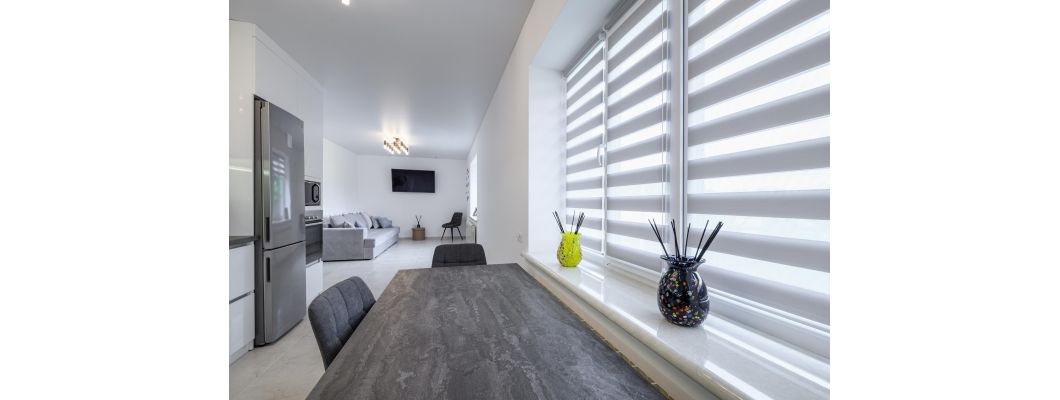
Day and night blinds, also known as zebra blinds, combine transparent and opaque horizontal strips. By moving the fabric, the strips can be aligned to let in more light or overlapped to increase privacy.
This system creates a contemporary look and offers more control than a conventional roller blind. However, the sheer sections and side gaps mean that they do not usually replace a true blackout blind. They are better suited to living rooms, kitchens and offices than for people who need to block out light completely whilst sleeping.
Electric And Battery-Operated Blinds
Electric blinds allow you to operate one or more window coverings using a switch, remote control or compatible control system. They are particularly convenient for tall windows, skylights and clusters of windows that are difficult to reach.
Motorisation also eliminates the need to handle the fabric directly and can remove loose cords, depending on the system. In homes with multiple windows, automation makes it possible to position the blinds consistently and adjust light levels without operating each unit manually.
SG-S offers electric systems and rechargeable battery-powered models. Current products include the Silent Gliss 4955 rechargeable roller blind system, introduced in 2025, and the 2355 and 2360 Roman blind systems. As dimensions, operating options and weight limits vary between models, each project should be assessed individually.
The Best Blind Types For Different Rooms
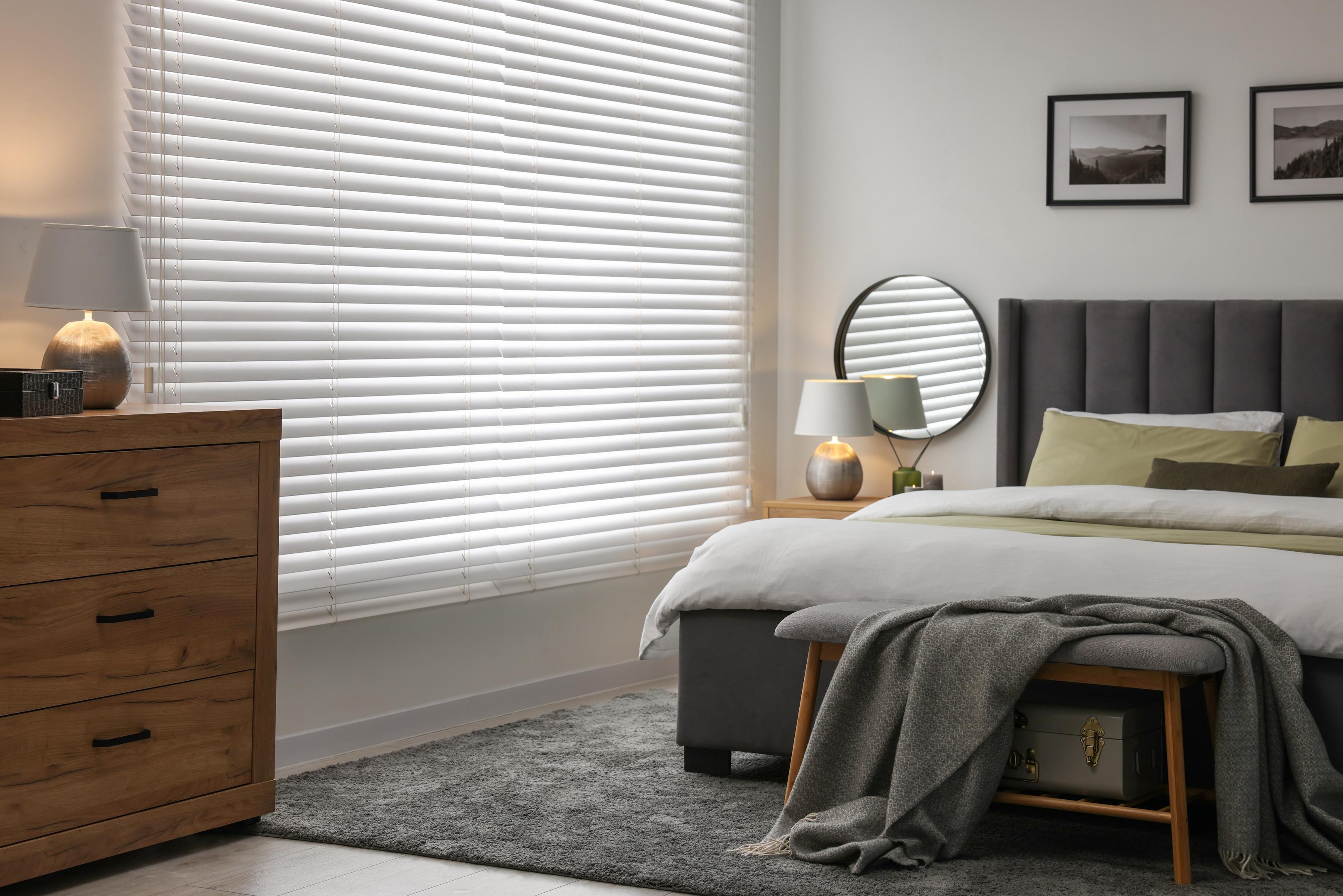
In bedrooms, roller or Roman blackout blinds help to create a darker space. A Roman blind gives a more luxurious look, whilst a roller blind offers a compact finish and is generally easier to maintain.
Living rooms allow for greater aesthetic freedom. Roman blinds add a touch of softness; Venetian blinds offer control over light; and roller blinds maintain a neat and discreet appearance.
For kitchens and bathrooms, opt for aluminium or fabrics specifically classified as suitable for damp areas. Moisture-resistant blinds can also be a practical choice for compatible uPVC windows, provided that the material and fitting method suit the frame. Real wood and decorative Roman fabrics may absorb moisture, odours or grease. ‘Moisture-resistant’ should be a confirmed characteristic of the material rather than an assumption based solely on the blind type. The Silent Gliss Fabric Finder allows you to filter fabrics suitable for damp environments.
In a home office, the aim is usually to control glare without blocking out light completely. Venetian blinds and light-filtering roller blinds are useful choices, provided that the position of the monitor and the direction of the sun are also taken into account.
Conservatories and skylights require careful consideration of the shape, pitch and access. Pleated blinds are a popular choice for shaped or sloping glazing, whilst electric systems can make difficult-to-reach windows easier to operate.
Choosing Blinds For Patio Doors And Bi-Fold Doors
Patio doors, sliding doors and bi-fold doors present different challenges to those posed by standard windows. The blind needs to cover a large area without obstructing the operation of the panels, handles or mechanisms.
Vertical blinds work well on sliding and French doors because they retract to the side. Panel glide systems are also suitable for large glazed areas: wide panels slide along tracks and can be grouped together when the door is open. Silent Gliss includes panel glide as one of its main categories of window coverings.
With bi-fold doors, each installation must be assessed individually. The distance between the glass, the handles and the area where the doors fold determines whether the system can be attached to the door leaves or must be mounted above the opening. An unsuitable blind may obstruct movement even if it is the correct size to cover the glass.
Inside Or Outside The Window Recess?
Fitting a blind inside the window recess creates a seamless finish and keeps the system aligned with the window. Before installation, however, it is necessary to check the handles, hinges, the shape and condition of the window frames, available depth and any variations in width.
Fitting the blind outside the recess covers a larger area and may reduce the amount of light entering through the edges. It may also be the best choice for shallow recesses or windows that open inwards. On the other hand, the blind will occupy part of the wall and may cover nearby decorative features.
There is no universally correct position. The right fit depends on the mechanism, the dimensions, the required level of blackout and the space needed to operate the window.
Why Choose SG-S?
SG-S specialises in supplying complete Silent Gliss systems and spare parts. Rather than limiting the choice to a single type of blind, the company offers roller, Roman, Venetian, vertical, pleated, electric and battery-operated solutions for residential and commercial applications.
This specialisation is particularly relevant when a project involves large windows, motorised systems, replacement parts or technical requirements that cannot be met by a ready-made blind.
To find out which solution suits your windows, explore SG-S’s complete systems or get in touch with the team for advice on measurements, operating options and the requirements of your space.
Summary: Finding Your Perfect Match
The right blinds strike a balance between style, light control, privacy and ease of use. Roller blinds offer simplicity; Roman blinds create a soft finish; Venetian blinds provide precise control; vertical and panel glide systems suit large glazed doors; and pleated blinds can accommodate sloping or irregularly shaped windows.
The material and installation method are just as important as the blind type. Check the fabric’s moisture resistance, the required level of blackout, the safety of the operating mechanism and the space available within the window recess. For larger projects or hard-to-reach windows, electric and battery-operated blinds can provide a more convenient solution all year round.
Frequently Asked Questions
What Are The Different Types Of Window Covering Blinds?
The main types include roller, Roman, Venetian, vertical, pleated, cellular or honeycomb, day and night, panel blinds and skylight systems. Blackout and electric blinds describe features that may be available in more than one of these categories.
What Type Of Blinds Are In Style Now?
Blinds with clean, simple lines, including roller and pleated blinds, remain popular in contemporary interiors. Wooden Venetian blinds add natural warmth, whilst aluminium versions create a neater, more minimalist finish. Electric and battery-powered systems can also reduce the need for visible operating components and make blinds easier to use. Nevertheless, the right blinds should suit the architecture and purpose of the room rather than simply follow a passing trend.
What Are The 12 Types Of Window Coverings?
There is no official, mandatory classification comprising exactly 12 categories. A comprehensive list might include roller, Roman, Venetian, vertical, pleated, cellular, day-and-night, panel, skylight, blackout, electric blinds and shutters. Some categories overlap: a roller blind, for example, may also be blackout and electric.
What Blinds Allow You To See Out But Not In?
Screen or solar fabrics can preserve part of the outward view during the day whilst making it more difficult to see into the room from outside. Venetian blinds also allow you to adjust the slats for privacy without blocking out all the light. However, this effect depends on the difference between indoor and outdoor light levels. At night, when the interior is brighter, transparent fabric cannot guarantee privacy, so an opaque layer should be closed.